


On 15 September 2026, La Paix began its new chapter at Corinthia Brussels after leaving Rue Ropsy-Chaudron in Anderlecht. Founded in 1892 and led by David Martin since 2004, the restaurant is carrying its name, chef and culinary identity into the restored Grand Hotel Astoria on Rue Royale.
It is tempting to read the move as a simple ascent from a neighbourhood institution to a grand hotel. The more useful question is harder: what happens when a restaurant whose singularity was partly tied to its unlikely address gains the infrastructure, visibility and symbolism of a luxury hotel?
A move that began before the name arrived
David Martin is not arriving at Rue Royale for the first time. When Corinthia Brussels reopened in December 2024, he was already responsible for the hotel's fine-dining restaurant, Palais Royal. September therefore brings the identity of La Paix into an operation Martin already knows: this is a transfer and a consolidation, not the discovery of an unfamiliar dining room.
The face and the plate
A portrait on the hotel's La Paix page makes the continuity visible: Martin appears in Corinthia's restored salons, not as a guest chef dropped into a new room, but as the chef whose project is being installed in the building's public life.
The plate shown in the same official presentation is deliberately spare: caviar, lemon and a spoon on a white plate. It is not a tasting note, and it cannot stand in for a meal at the new address. It does, however, show the visual grammar Corinthia is choosing to associate with La Paix: precision, restraint and a single ingredient allowed to carry the frame.
The official La Paix page currently announces dinner from Tuesday to Saturday and Friday lunch. It also presents a chef's table for two to ten guests and a private room for six to twenty-four. These formats show how the new setting can change the restaurant's operating range. They do not yet tell us how the experience will feel once the opening period has settled.
Two addresses, two ideas of luxury
In Anderlecht, La Paix occupied a neoclassical building opposite the Abattoirs. Its official history describes a dining room shaped by art and an open kitchen, while Martin's cooking draws together French, Belgian and Japanese references. The address mattered because it resisted the expected geography of a two-star restaurant. Guests travelled to a working market district; the destination never allowed the meal to detach completely from the city around it.
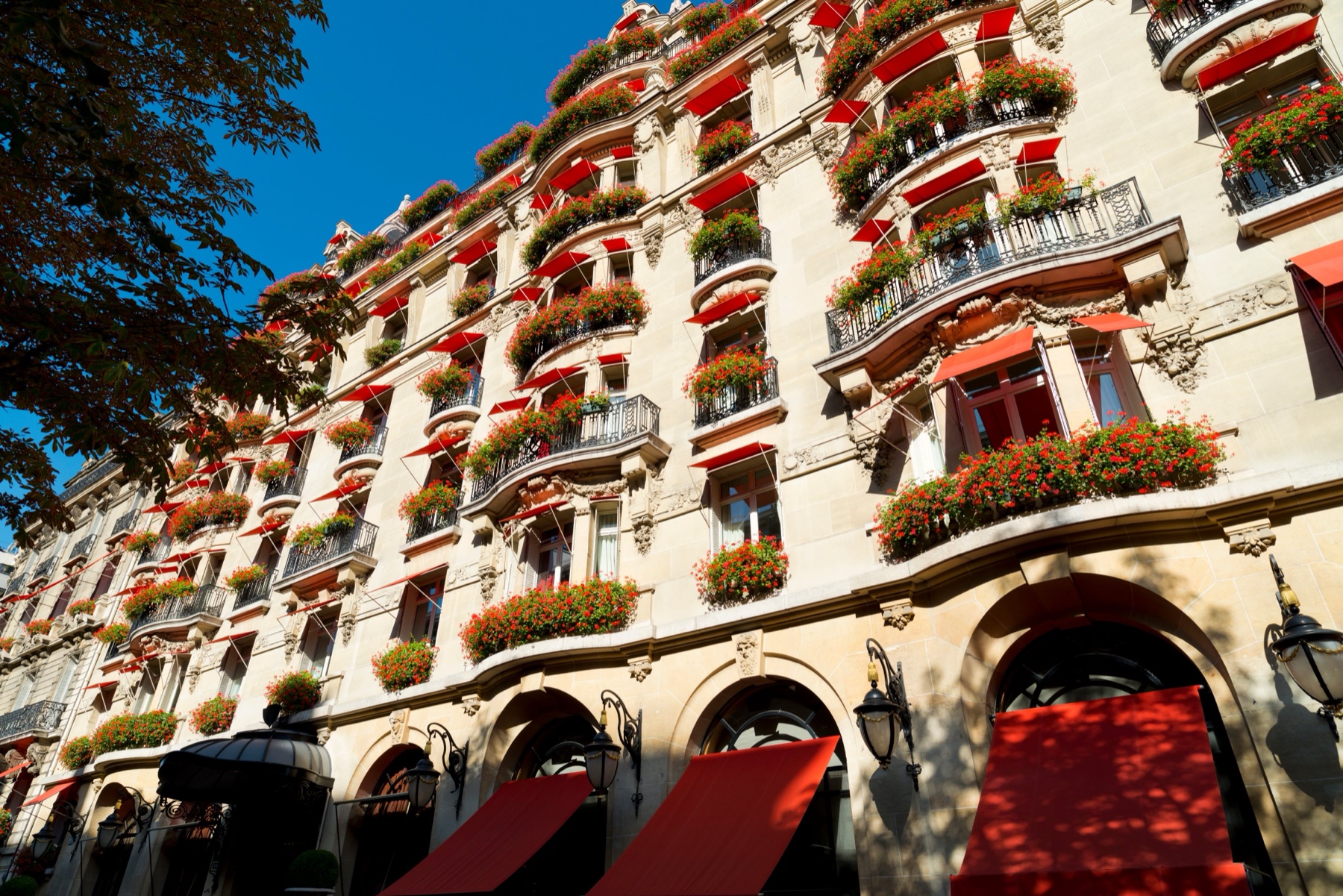
Rue Royale carries a different weight. Built in 1908–1909, opened in 1910 and protected since 2000, the former Grand Hotel Astoria was conceived as a stage for official Brussels. Corinthia says that its reconstruction represented an investment of €150 million and returned 126 rooms to service in 2024. La Paix is not merely changing rooms. It is entering a hotel system whose architecture, hospitality and international visibility precede the first plate.
The hotel changes the operating model
A grand hotel brings overnight guests, international distribution, concierge recommendations, private hospitality and event traffic. The practical opportunity is not necessarily a larger restaurant; it is a broader set of occasions on which the restaurant can be chosen. The chef's table and private room make that shift visible, placing La Paix within a hospitality ecosystem rather than at the end of a single-purpose journey.
Corinthia's general manager Nicolas Kipper told Forbes Belgium that roughly 85% of the clientele at Le Petit bon bon, another restaurant in the hotel, is local. This is a management claim about a different venue, not evidence about La Paix. It nevertheless defines the ambition: the hotel does not want its restaurants to depend only on residents. The harder test is whether La Paix can retain the public that followed it to Anderlecht while finding a new Brussels audience behind a five-star façade.
The two stars need a precise tense
Corinthia presents La Paix as David Martin's two-Michelin-starred restaurant, and Gault&Millau records its move from Anderlecht to the centre of Brussels. That distinction belongs to an established restaurant and chef. It should not be turned into a new Michelin verdict on a dining room that has just opened.
As of 16 September, no live Michelin Guide assessment of La Paix at Rue Royale 103 was visible. The accurate formulation is therefore simple: the restaurant known for two stars has moved; the new address has not already been awarded a fresh rating merely because the name crossed Brussels.
What the opening will have to prove
Three questions now matter. Can the service preserve the warmth and directness associated with La Paix inside a ceremonial hotel? Will Brussels diners adopt it as a city restaurant rather than reserve it for celebrations and stays? And can the private formats support the kitchen's ambition without diluting the main experience? Reservations and launch announcements cannot answer any of them.
The most interesting outcome would not be a smoother version of La Paix. It would be a model for placing an established Brussels restaurant inside a grand hotel without making it anonymous. Corinthia gives David Martin a larger stage; the next months will show whether La Paix can use it while keeping the productive tension that made an address in Anderlecht feel essential rather than improbable.