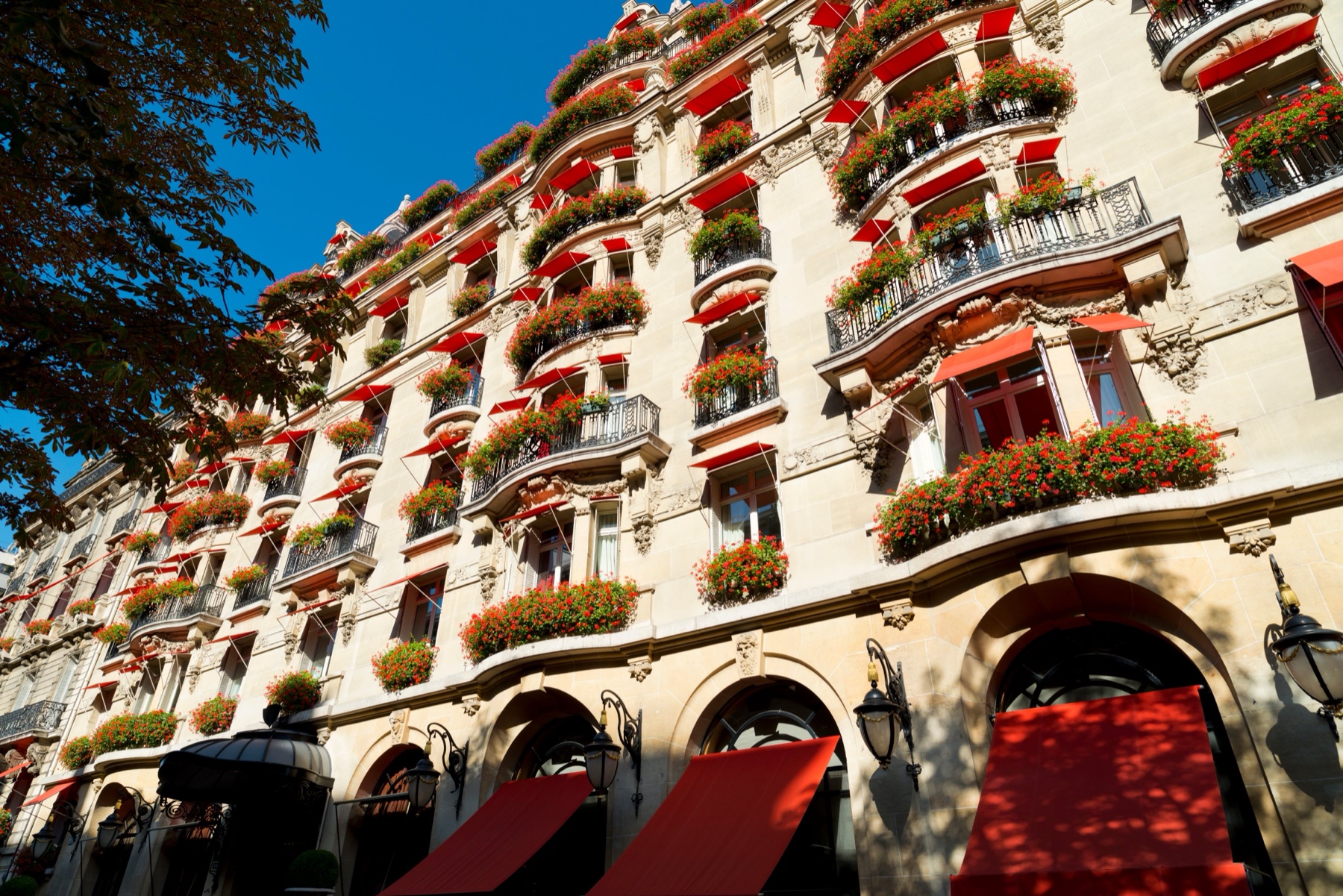



Paris still knows how to preserve a few secrets. Le Narcisse Blanc is one of them. On Boulevard de la Tour-Maubourg, between the Seine, the Eiffel Tower and Les Invalides, its façade remains almost deliberately silent. Nothing announces a grand dining room to the street. Nothing prepares the visitor for the small, elegant restaurant waiting beyond the hotel lobby. That first surprise became one of the defining pleasures of our experience.
Cléo is not hidden as a contrivance. It feels protected. The room has the proportions of an address one might share only with people who will understand it. During our visit, we especially appreciated this sense of intimacy: the feeling of having stepped out of Paris without ever leaving its centre, and of discovering a gastronomic table where one would not necessarily think to look for one.
A Left Bank Address With a Singular Muse
Le Narcisse Blanc opened in 2016 in the 7th arrondissement. Its identity was built around Cléo de Mérode, the dancer and icon of the Belle Époque whose profile fascinated painters, photographers, writers and sculptors. Gustav Klimt, Henri de Toulouse-Lautrec, Nadar and Marcel Proust all belonged to the wider cultural constellation surrounding her image. Composer Reynaldo Hahn is said to have called her a “pretty little narcissus”, the phrase from which the hotel draws its name.
The reference is more than decorative. Cléo de Mérode embodied a particular form of Parisian elegance: famous yet elusive, sophisticated without theatrical excess. The hotel translates that ambiguity through pale colours, powdery tones, curved lines and a sense of softness that tempers the formality of its Haussmann setting.
Architects Laurent and Laurence and decorators Thierry Martin and Thibaut Fron shaped the property around this restrained classicism. The result is a house of 37 rooms and suites whose luxury is expressed through proportion and detail rather than spectacle. The finest suites open views across the Parisian rooftops; the approximately 40-square-metre Cléo Suite adds an Eiffel Tower outlook and a period marble fireplace.
The Luxury of Remaining Intimate
Le Narcisse Blanc calls itself a hotel and spa, yet its scale feels closer to a private residence. This matters. Paris has no shortage of palaces designed to overwhelm. Here, the experience works in the opposite direction. Corridors are hushed, the palette calms the eye, and service finds a tone that is attentive without becoming ceremonial.
Below street level, the spa extends this sensation of withdrawal. Its 13-metre pool is equipped for counter-current swimming and accompanied by a whirlpool, sauna, fitness room and a treatment room for two. The current treatment menu is built with Anne Semonin protocols. The spa is not monumental, but that is precisely the point: it offers a rare, cocoon-like pause at the heart of the Left Bank.
The hotel’s location makes the contrast even more striking. The Esplanade des Invalides, Pont Alexandre III and the Grand Palais lie within an easy walk, while the Eiffel Tower remains part of the neighbourhood’s visual horizon. One returns from the city to a place that seems to lower its voice the moment the door closes.
Cléo, the Restaurant One Does Not See Coming
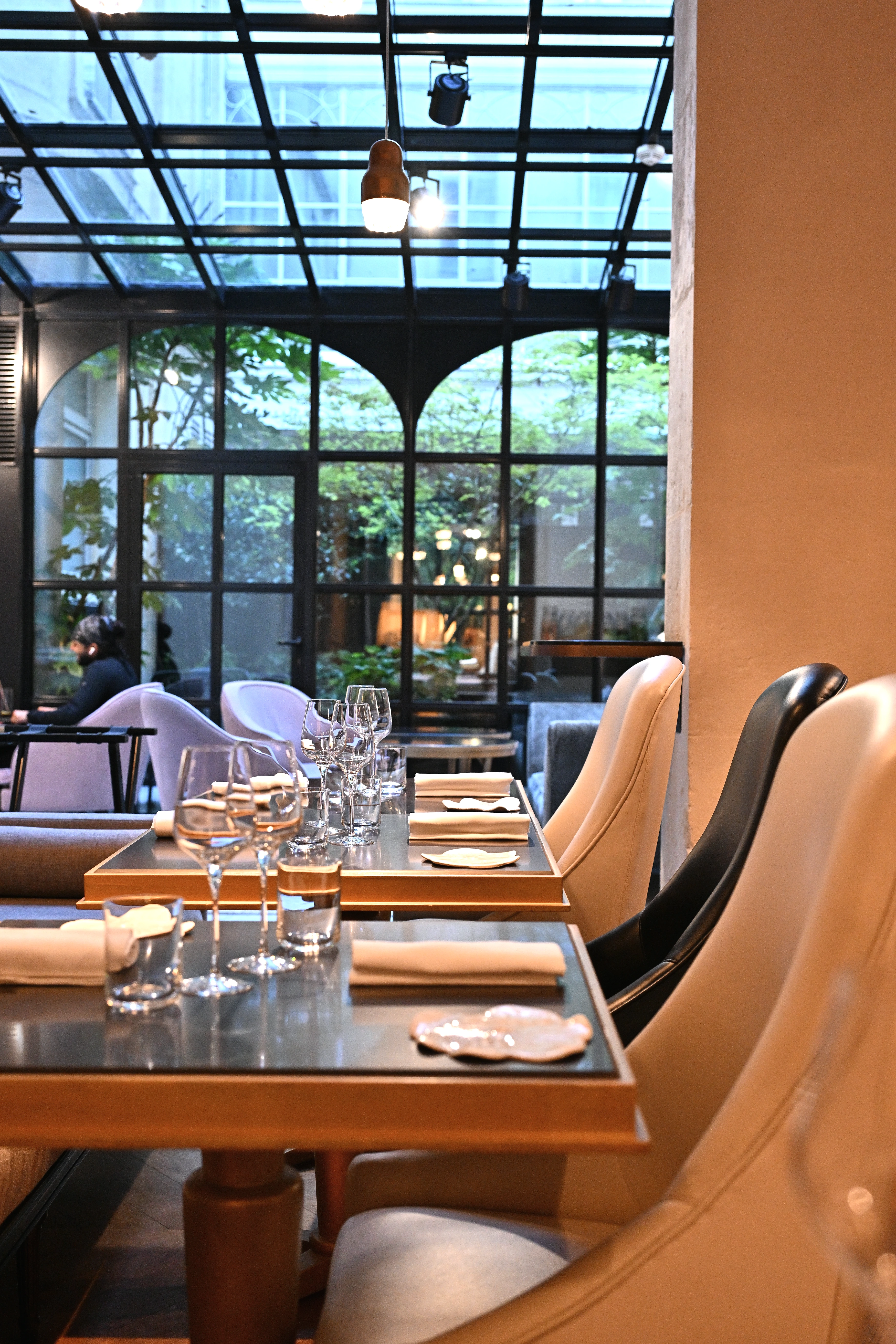
The restaurant takes the muse’s first name and makes discretion its greatest asset. The dining room is compact, contemporary and warm, with enough distance between tables for conversation to remain private. There is no attempt to imitate a palace restaurant on a smaller scale. Cléo has its own rhythm, one that values closeness, precision and quiet attention.
This concealed quality shaped our first impression. From outside, it is difficult to imagine that such a fully formed gastronomic experience exists here. The discovery therefore feels personal, almost confidential. In a city where so many restaurants announce themselves before the first plate arrives, Cléo allows the cooking to make the introduction.
Alexandre Semperé and the Architecture of Sauce
A new chapter is now being written by chef Alexandre Semperé. His path is grounded in classical French technique: he trained alongside Christian Constant and later worked in the worlds of Alain Ducasse, the Plaza Athénée and Les Ombres. That foundation is essential to understanding his food. Beneath the apparent clarity of the plates lies a cook who knows how to build flavour patiently.
Sauces are his most recognisable signature. At Cléo, they are not a finishing gesture applied to decorate a plate. They are its structure: the element that links the principal ingredient to acidity, bitterness, salinity, roasting notes or a vegetal echo. A good sauce does not merely intensify flavour. It gives the dish direction and length. Semperé treats it as a language in its own right.
Yet reducing his cuisine to sauces would miss the broader picture. The restaurant’s current identity gives vegetables and seafood a central role, with seaweed, citrus fruit and infused oils appearing as recurring tools rather than effects. Seasoning is exact, products are used as completely as possible, and the cuisine seeks natural sweetness instead of relying on refined sugar. These choices reveal a chef interested not only in classical depth, but also in contemporary clarity.
This creates a useful tension. The technique comes from the French canon; the expression is lighter, more saline and more botanical. The best moments are those in which nothing feels isolated. A vegetable can supply freshness, a marine element can sharpen the line, and the sauce can bring everything into focus without taking over.
A Menu Designed Around the Moment
At lunch, Cléo favours a shorter seasonal format. Dinner unfolds through five- or seven-course menus, with a vegetarian path available. The structure allows the kitchen to tell a longer story without multiplying choices for their own sake. It also reinforces the feeling that the restaurant is a destination, even when discovered inside a hotel.
What stayed with us was not one spectacular gesture, but the consistency of the whole experience. The room never raises its voice. Service protects the intimacy of the table. The cuisine advances with concentration, guided by seasoning and the continuity of its sauces. Cléo surprises precisely because it does not force the surprise.
From Maison Favart to Le Narcisse Blanc
Le Narcisse Blanc belongs to Lignée Hôtels, the family collection that also includes Maison Favart near the Opéra Comique. The relationship is worth noting because the two addresses interpret Paris through different eras and neighbourhoods. Maison Favart embraces the theatre, ornament and 18th-century spirit of the Right Bank. Le Narcisse Blanc evokes the Belle Époque with a paler, more restrained sensibility on the Left Bank.
Their common ground lies less in a repeated decorative formula than in a certain idea of hospitality: historically anchored houses, a strong narrative identity and a luxury that prefers personality to scale. Cléo extends that philosophy through food. It gives Le Narcisse Blanc an address within the address, capable of attracting diners who may never have considered entering the hotel.
What We Truly Take Away
Our strongest memory is the contrast between what the street reveals and what the house contains. From the pavement, Le Narcisse Blanc remains discreet. Inside, the hotel, spa and restaurant form a surprisingly complete experience, united by intimacy and restraint.
Cléo deserves attention not because it is hidden, but because it rewards discovery. Alexandre Semperé brings a precise culinary voice shaped by classical technique, expressive sauces, seafood, vegetables and disciplined seasoning. The room gives that cuisine the silence it needs. Together, they create one of those Parisian meals that feels less like a reservation than a confidence shared.
LE NARCISSE BLANC & CLÉO — THE GASTROGNITO NOTEBOOK
Address
19 Boulevard de la Tour-Maubourg, 75007 Paris, France
Why go
For a discreet five-star refuge and an intimate gastronomic restaurant a few steps from Les Invalides.
The culinary signature
Alexandre Semperé’s precise seasonings and identity-defining sauces, supported by vegetables, seafood, citrus fruit, seaweed and oils.
Gastrognito verdict
A confidential Parisian address whose greatest luxury is coherence: a discreet hotel, an intimate spa and a restaurant with a real culinary point of view.