


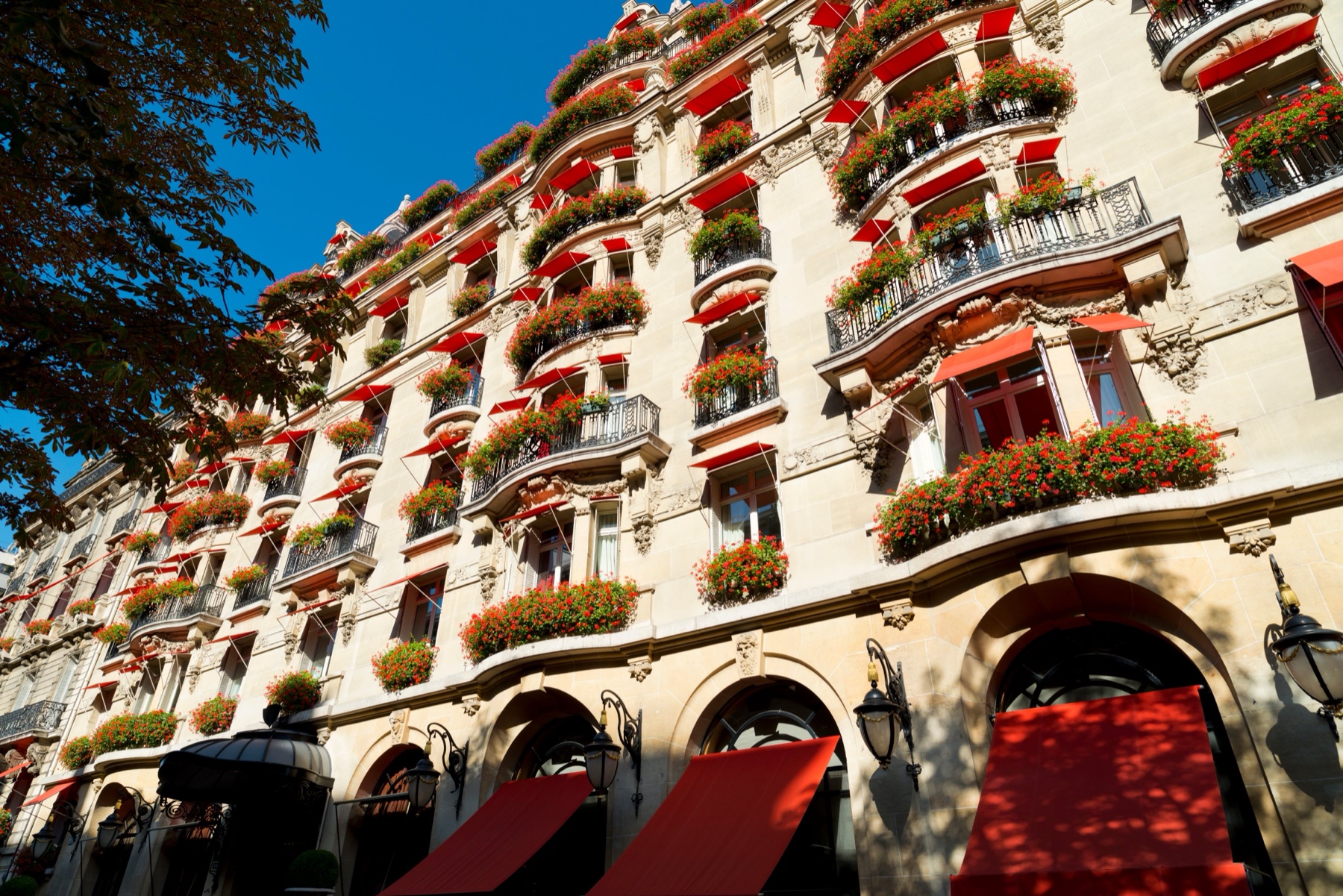
On 3 September 2026, Hôtel Plaza Athénée opened its gastronomic restaurant under a new name: La Grande Table du Plaza Athénée. This is more than a change above the door. At a moment when fine dining is questioning its price, rituals and audience, the Paris palace is placing heritage recipes, tableside preparation and formal hospitality at the centre of the experience.
The restaurant succeeds the address that carried Jean Imbert’s name, but its new identity is deliberately collective. Executive chef Jocelyn Herland, chef Anthony Di Prospero, pastry chef Angelo Musa and restaurant director Denis Courtiade are now foregrounded together. The proposition is clear, but launch material alone cannot establish its success. This is an opening report, not a review of the dining experience.
A new name, with the team in full view
The 3 September opening replaces Jean Imbert au Plaza Athénée with a name attached to the house rather than to one personality. Le Chef confirms that Herland leads as executive chef, Di Prospero runs the kitchen, Musa oversees pastry and Courtiade remains in charge of the dining room. The hotel’s current material also names pastry chef Damien Gibault and head sommelier Laurent Roucayrol, while the menu places dining-room service under Courtiade and Anna Crupano. It is a substantial ensemble, and the relaunch presents that continuity of trades as part of the authorship.
Service is scheduled for dinner from Tuesday to Saturday, with Saturday lunch the only midday opening. Michelin’s current online Guide has already updated the listing to La Grande Table du Plaza Athénée and retains it among Paris’s one-star restaurants. That continuity requires care: the new identity opened after the latest guide cycle and has not received a separate new award since 3 September. The star provides context, not a fresh verdict on a restaurant only days into service.
A menu composed as a history lesson
The launch menu makes the historical argument explicit. The six-act Les Agapes menu is priced at €295 and moves from Potage Escoffier and pâté en croûte to a crustacean course, then a choice including turbot à la Dieppoise, sea bass with vin jaune sabayon, roasted veal or pigeon with dark fruit. A French vegetable service, cheese and the Grand Dessert Belle Époque complete the sequence. A plant-based experience, Les Quatre Saisons, is listed at €275.
Saturday lunch is a shorter €190 menu including a glass of champagne, mineral water and a hot drink. These are the prices published by the hotel for September 2026, not an estimate. The menu connects its dishes to Carême, Gouffé and Escoffier and says some of its source recipes reach back 250 years. Those historical lineages are the restaurant’s own framing; the verifiable point is that the new menu uses classical names and forms as working material rather than as discreet references.
The dining room is part of the argument
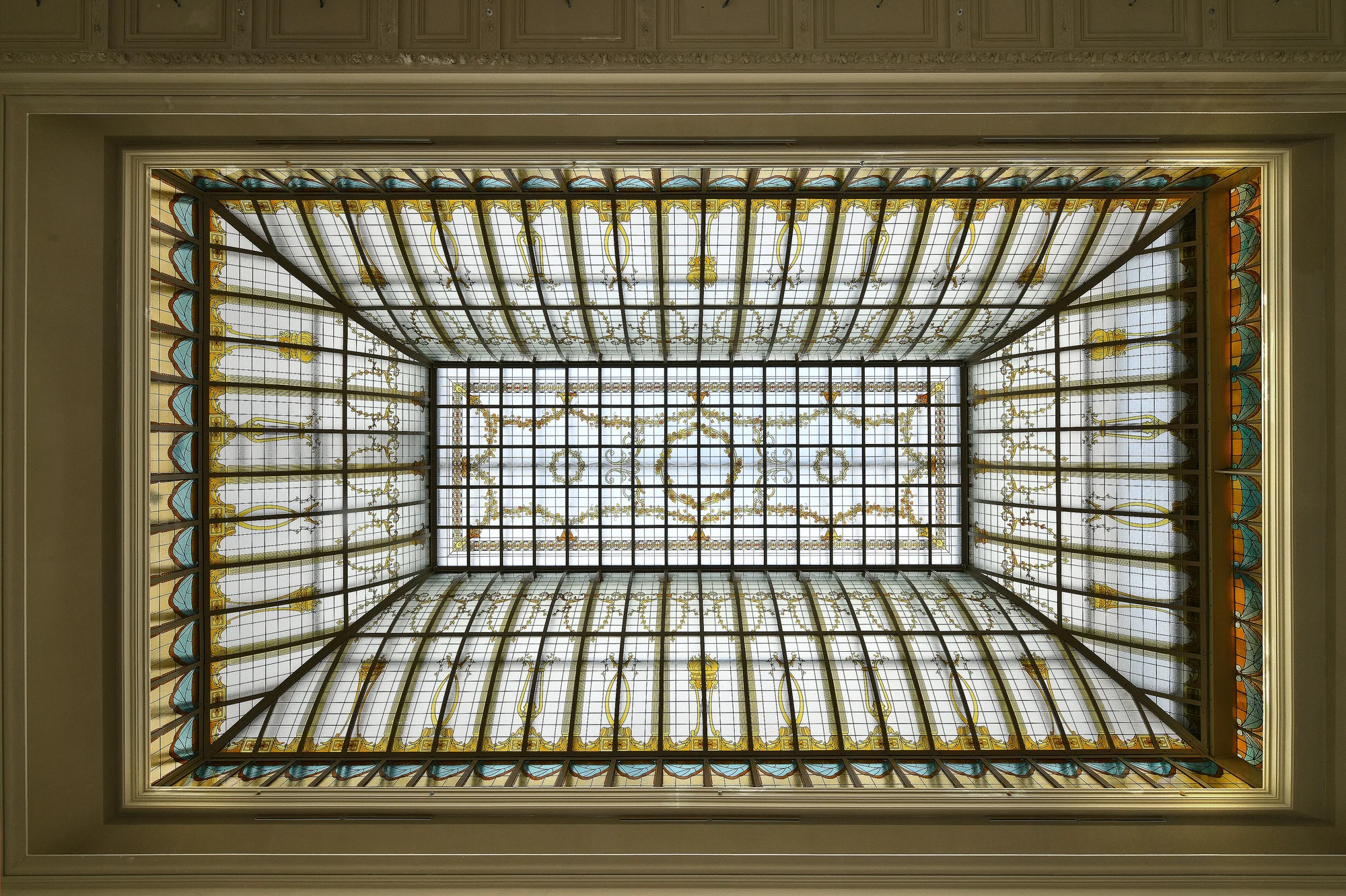
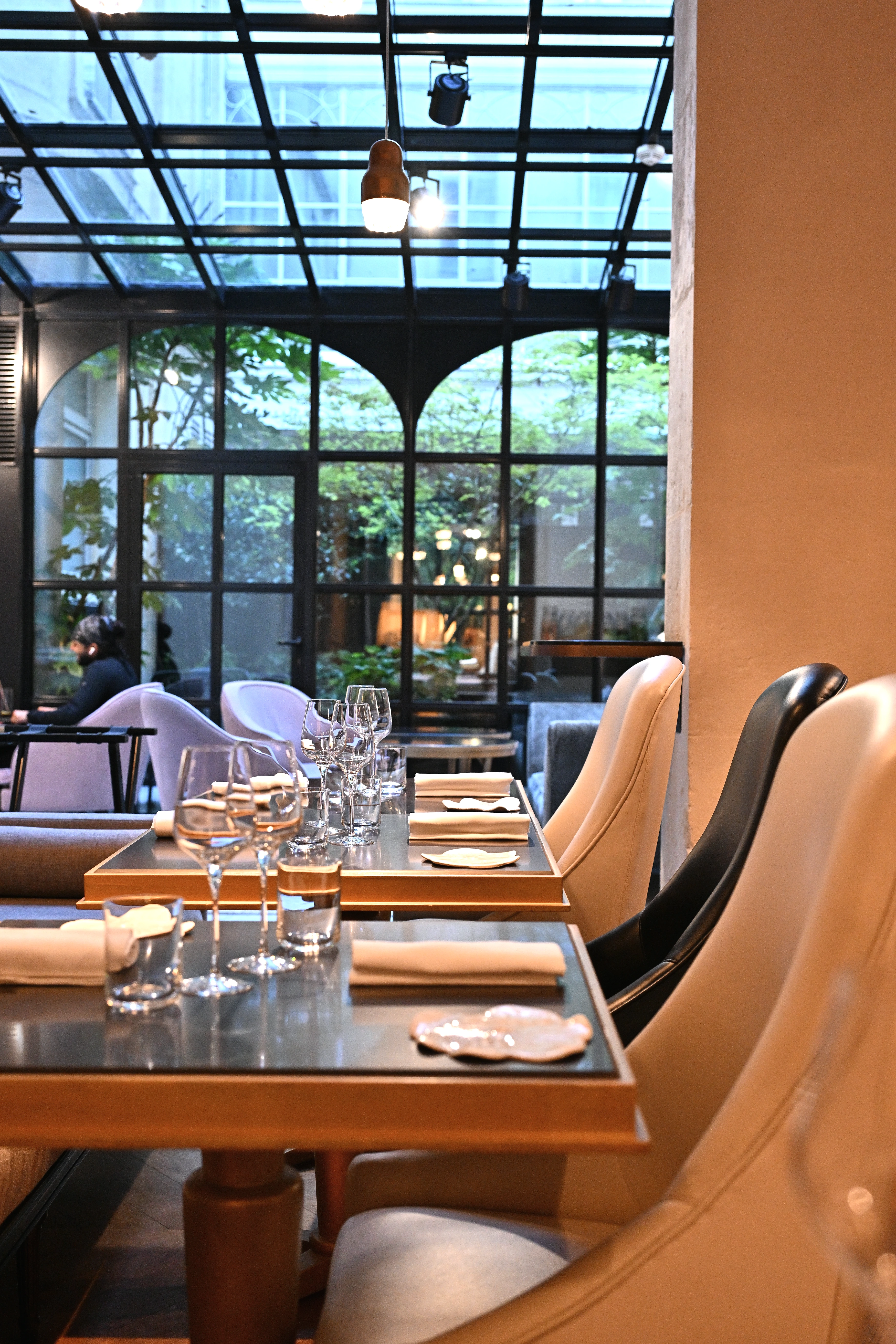
The official images below show Rémi Tessier’s dining room across its continuity from the previous Jean Imbert identity to La Grande Table. Two are also used by the palace on the restaurant’s current page; the close view of the central table is an archive image and is presented here as such.
The food is only one half of the stated proposition. According to the palace, Rémi Tessier’s room places a central table in pink Breccia marble amid 20,000 sheets of gold leaf applied from the walls to the ceiling domes. Flambéing and carving are performed in front of diners. Courtiade, who has spent more than two decades at the hotel, is positioned not simply as the person who manages service but as the conductor of a visible sequence of gestures.
The same logic reaches the cellar and dessert. Roucayrol draws pairings from a hotel cellar said to hold more than 40,000 bottles, while Musa and Gibault conclude the meal with a Belle Époque dessert built around French pastry classics and the season. Nothing here adopts the visual language of the stripped-back tasting counter. La Grande Table treats the room, tableware, choreography and specialist roles as culinary content in their own right.
A relaunch, not an entirely new restaurant
The change should not be overstated. This is the gastronomic restaurant of an operating palace, in an existing Tessier-designed room, with several established members of the house team. Its novelty lies in the name, the menu’s declared historical programme and the decision to attribute the experience to a collective. Calling it a wholly new restaurant would erase that continuity; calling it a simple rename would miss the repositioning.
That middle ground is what makes the opening relevant beyond Avenue Montaigne. Many luxury restaurants now reduce ceremony in search of ease. Plaza Athénée is testing the opposite idea: that ritual can feel contemporary when diners understand its purpose and when service becomes participation rather than intimidation. The official vocabulary promises joy and surprise. Whether guests experience those qualities will depend on timing, warmth and precision, none of which can be established from a launch statement.
Elsewhere in the same palace, La Cour Jardin offers a very different seasonal setting. Gastrognito visited it in October 2025; that archive does not depict La Grande Table, but it extends the portrait of the house.
Fine dining receives two opposing diagnoses
The timing gives the relaunch an unexpected counterpoint. Four days after La Grande Table opened, Bruno Verjus announced that Table would close on 22 December, using the declaration “fine dining is dead” while promising a different way to share his cooking. The two events do not prove that one model is replacing another. They reveal how differently leading restaurants now define the problem: one questions exclusivity by leaving its current format, while the other intensifies the grand dinner and asks ceremony to justify itself anew.
For Plaza Athénée, price remains the clearest limit to any broad claim about accessibility. The €295 dinner is an exceptional-occasion purchase for most diners, even before drinks or supplements. The more defensible ambition is cultural: to make classical French service legible, animated and worth watching rather than merely deferential. Occupancy, guest response and a future guide assessment are not yet available. For now, La Grande Table is a sharply defined wager—one that Paris can finally test in service.