


Accor has agreed to spend around €1.6 billion to acquire the remaining minority interests covered by a new agreement with Ennismore’s shareholders. The purchases are scheduled in three tranches between January 2027 and January 2028, so this is not a completed takeover. It is, however, a precise statement of where the French group sees value in hospitality.
Ennismore represents only about 5% of Accor’s rooms, yet Accor says it contributes roughly 20% of recurring EBITDA and about 40% of the group’s EBITDA growth over the past three years. Those company-supplied ratios turn an ownership transaction into a wider industry signal: lifestyle hospitality has moved from a collection of expressive brands to a material financial engine.
A €1.6 billion timetable, not a completed takeover
The agreement announced on 17 November covers 44.3% of Ennismore’s fully diluted capital. Accor is due to acquire 25.4% by the end of January 2027, another 6.3% in July 2027 and 12.6% in January 2028. The three figures add up to the disclosed 44.3%; they should not be mechanically added to older ownership percentages, which were reported on different capital bases. Accor says the sequence is intended to take it to full ownership.
The total consideration is approximately €1.6 billion, based on an equity value of around €3.7 billion for Ennismore. Accor separately places the transaction at roughly 18 times expected 2027 EBITDA. Equity value and enterprise-value multiple are different measures, and neither turns the future closings into a present fact.
Financing is meant to combine at least €500 million of accelerated disposals of non-strategic assets, an additional credit facility and the option to settle part of the price in Accor shares. Staging the purchase spreads the funding and transfer of ownership; it also leaves execution, financing and market risk in place across more than a year.
Five percent of rooms, one fifth of recurring EBITDA
The strategic case rests on a disproportionate contribution. Ennismore’s nearly 200 hotels across 40 countries account for about 5% of Accor’s room base, according to the group, but approximately 20% of recurring EBITDA and 40% of EBITDA growth over the past three years. Its development pipeline is described as close to 70% of the current hotel portfolio.
Those percentages originate with Accor, even when repeated by independent reporting, and they do not disclose the economics of each brand or venue. What they do show is concentration: a relatively small room footprint is carrying a much larger share of earnings and recent growth. That is why the price is not only about buying out minority holders; it secures control of a platform Accor considers central to future profit.
The product is larger than the room
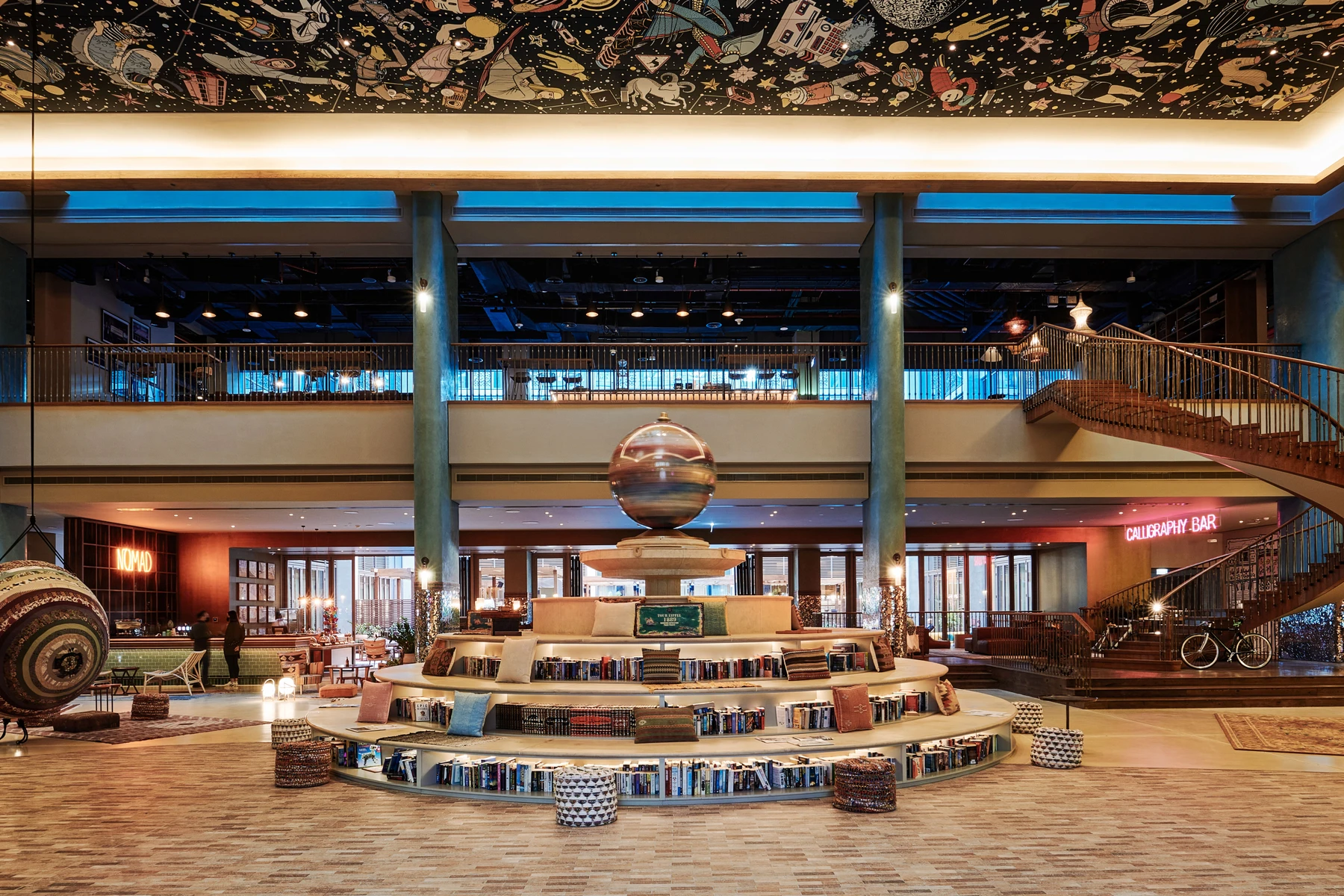
Ennismore pairs its hotels with more than 800 restaurants and bars. That number matters because the lifestyle proposition is built around the public life of a property as much as its bedrooms: a restaurant, bar or lobby can serve local audiences, give a brand a daily rhythm and make a hotel visible beyond overnight demand. This is an editorial inference from the shape of the portfolio, not a claim that every venue produces the same margin.
The platform therefore sells owners more than a flag. It offers differentiated brands, operating expertise and food-and-beverage concepts that can be adapted without making every address identical. The value of that promise will still be tested hotel by hotel. Accor does not disclose the individual contribution of those 800-plus venues, so scale should not be confused with uniformly proven profitability.
Autonomy under a single shareholder
The relationship began as a joint venture. At its 2021 closing, Accor held 66.67% and founder Sharan Pasricha 33.33%, while Ennismore was presented as an autonomous entity. The 2026 agreement changes the ownership destination, but Accor says the culture, management structure and operating autonomy will continue. Pasricha is also expected to remain on the board. These are commitments about the next phase, not outcomes that can yet be verified.
That tension is central to the deal. Full control can simplify capital allocation, development and governance, yet lifestyle brands depend on distinct voices and local credibility. If every concept is pulled too visibly toward the parent group, the very difference Accor is paying for could weaken. If autonomy becomes a slogan without operating freedom, the ownership logic will have solved one problem and created another.
What the valuation still has to prove
A multiple of around 18 times expected 2027 EBITDA sets a demanding reference point. Accor expects Ennismore to sustain double-digit EBITDA growth, but that is a company forecast rather than a completed result. The pipeline must convert into openings, existing hotels must preserve their contribution and the financing plan must be delivered without eroding the strategic benefit.
Accor also keeps the possibility of future strategic partners or a public listing open. Neither option has been decided or scheduled. For now, the useful markers are more immediate: whether each tranche closes as planned, whether the promised autonomy survives tighter ownership, and whether restaurants, bars and public spaces continue to create relevance rather than simply add outlets.
Guests are unlikely to see an instant change from a transaction that unfolds through January 2028. The larger significance is already visible in the numbers: Accor is assigning substantial capital to the part of its portfolio where brand, food, drink and local audience are meant to work as one system. The deal makes lifestyle hospitality financially central; the next two years must show that control can strengthen it without standardising what made it valuable.