


At a century-old palace, a change of leadership is not yet a transformation. Announced on 27 May and effective from 1 October 2026, Fabrice Moizan’s arrival at Le Bristol Paris raises a quieter question than any spectacular repositioning: how can leadership be renewed without breaking the continuity of a hotel now entering its second century?
After more than a decade at Eden Rock, where he helped steer a two-year reconstruction after Hurricane Irma and the extension of the property’s wider hospitality universe, Moizan brings experience of highly personalised luxury. Le Bristol presents a different context. The task is not to reproduce a formula, but to translate that culture of attentiveness into a Paris institution whose identity long predates its new leader.
A clear transition date, but no declared break
The appointment was announced on 27 May 2026 and takes effect on 1 October. Moizan will also join the Oetker Hotels executive committee, placing his new role at the intersection of Le Bristol’s leadership and wider responsibilities within the group. Oetker’s announcement also says he will remain connected to Eden Rock as Jean-Alexis Costa takes over there.
The confirmed facts describe an organised succession, not a transformation plan that has already been made public. No new concept, building project or repositioning can yet be inferred from the appointment. The more relevant question is what Moizan’s experience might bring to a hotel whose value rests precisely on continuity.
Eden Rock and the experience of reconstruction
Moizan has led Eden Rock since 2014. Working with Jean-Alexis Costa, the Matthews family and the hotel team, his tenure included the property’s two-year reconstruction after Hurricane Irma. It also encompassed a period of commercial growth and the development of activities around villas, boutiques, yacht rental and brand collaborations.
That period offers a relevant precedent: it combined the preservation of a strong identity with the reopening and evolution of a luxury property. It does not, however, provide a model that can simply be transferred. A century-old Paris palace operates at a different rhythm and within a different cultural imagination. The useful skill is therefore not repetition, but adaptation.
Attentiveness before ceremony
In an interview published on 28 September, shortly before he takes up the role, Moizan placed attentiveness and care ahead of rigid protocol. That emphasis does not imply lower standards. It suggests instead that precision matters most when it is experienced as consideration for the guest, rather than as a display of procedure.
For Le Bristol, the distinction is important. At the highest level of hospitality, personalisation is not about removing codes but making them almost invisible. The challenge will be to preserve the composure of an institution without allowing its heritage to harden into ceremony. This is an editorial reading of his stated approach, not an operational programme announced by the hotel.
The weight of a palace in its second century
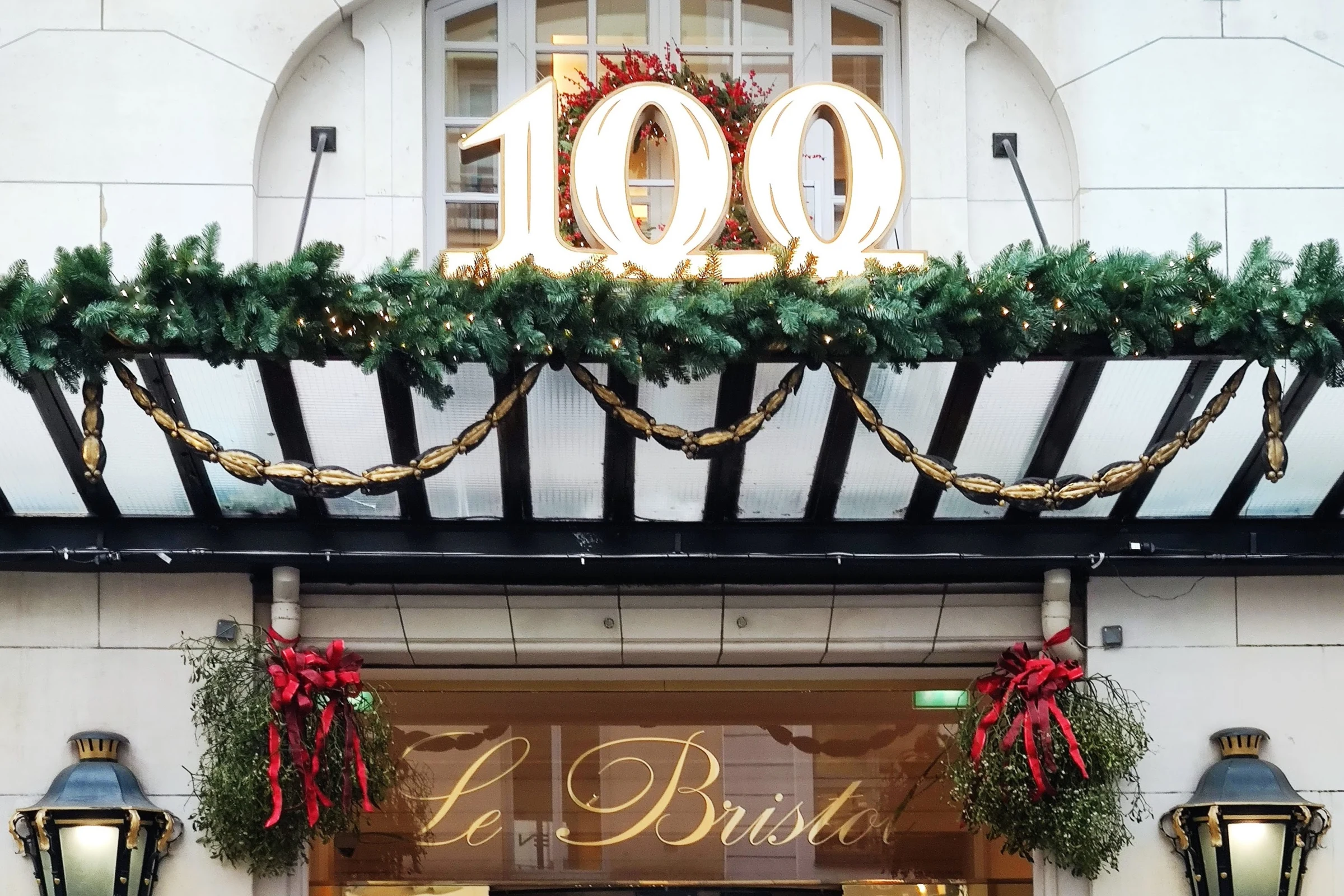
Opened in 1925, Le Bristol Paris has passed its centenary. Its official website also presents it as the first hotel in France to receive the Palace distinction. That historical depth is both an asset and a constraint: it gives the hotel an immediately recognisable identity, while reducing the relevance of change pursued for its own sake.
From 1 October, the first meaningful signals are therefore unlikely to come from a spectacular announcement. They will emerge in the way the service culture evolves without becoming detached from the hotel’s history. Moizan’s place on the Oetker Hotels executive committee adds another level to watch: how the Paris experience may inform the group’s broader thinking.
A transition to judge over time
Fabrice Moizan’s arrival begins a new chapter, but there is no basis yet for calling it a break. His record at Eden Rock gives the transition a coherent premise; it does not predetermine its outcome. The true measure of change will be subtler: whether Le Bristol can deliver attentive, contemporary hospitality without turning a century-old institution into a mere concept.