


A double promotion can look like a simple awards-night headline. The more revealing detail in the 2026 MICHELIN Guide Netherlands is that its two new two-star restaurants are both recent, highly personal projects led by chefs whose reputations were already established elsewhere. Azurite in Delft and SUIS in Schin op Geul did not emerge from nowhere; they gave Mario Ridder and Ralf Berendsen new settings in which to make their experience legible on their own terms.
Announced at MECC Maastricht on 5 October, the result matters beyond two addresses. It shows how quickly a guide can recognise a newly formed restaurant when an experienced team builds a clear identity—and why a chef's previous distinctions are context, never a guarantee. For Belgian readers, SUIS also carries a close cross-border thread: Berendsen left the two-star restaurant bearing his name at La Butte aux Bois in Lanaken before opening in South Limburg.
A compact guide result with a larger signal
Michelin's 2026 Dutch selection contains 499 restaurants, including 119 with at least one star. De Librije remains the country's sole three-star restaurant; 20 restaurants now hold two stars, including the two newcomers; and 98 hold one star, seven of them for the first time. Ten new Bib Gourmand distinctions bring that category to 77 addresses. These figures are a snapshot of Michelin's selection, not a census of Dutch restaurant quality, but they show where this year's movement occurred.
The two-star additions are especially striking because they are not conventional stories of gradual ascent. Neither Azurite nor SUIS passed through a one-star stage in the Dutch guide at its current address. That does not mean the restaurants bypassed scrutiny, or that their chefs' earlier stars transferred with them. It means Michelin judged two newly constituted restaurants at two-star level in the same edition.
Azurite: a second season, not an overnight success
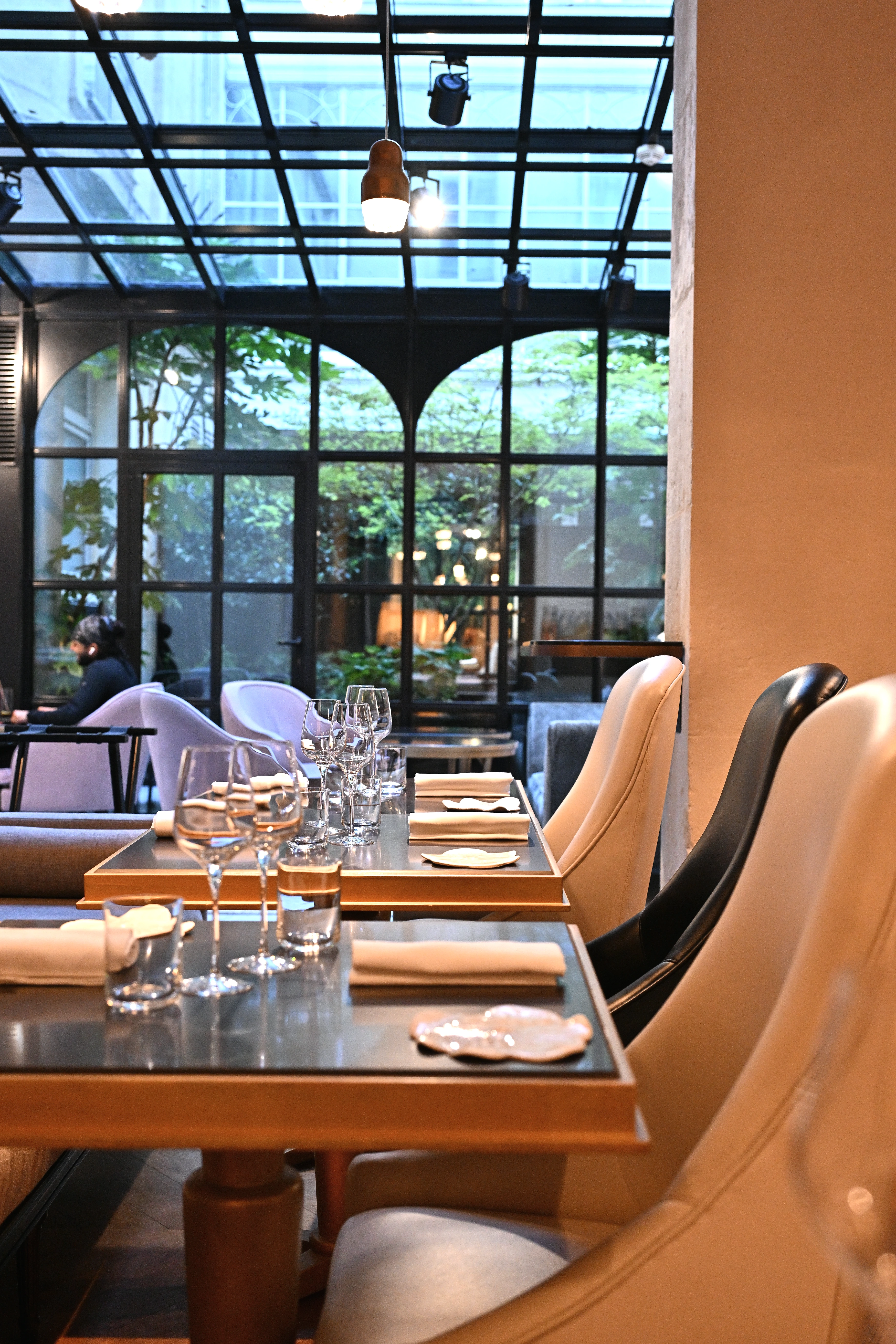
Mario Ridder opened Azurite on 2 September 2025 in Huis van Delft, beside the city's railway station. The restaurant arrived only about a month before the previous Dutch guide was presented and received no star in that edition. One year later, the leap to two stars may look sudden on paper; the chronology is more measured. Michelin had a full operating season in which to assess a restaurant designed around 24 covers, a visible kitchen and Ridder's classically grounded, French-influenced cooking.
Ridder had already held two stars at De Zwethheul and later one at Joelia. Azurite describes itself as his most personal project, and its official presentation reinforces that idea through an understated room, an extensive wine collection and a format intended to keep the chef close to the service. The important distinction is that experience reduced the mystery around the cook, not the evidential burden on the new restaurant.
SUIS: four months between opening and recognition
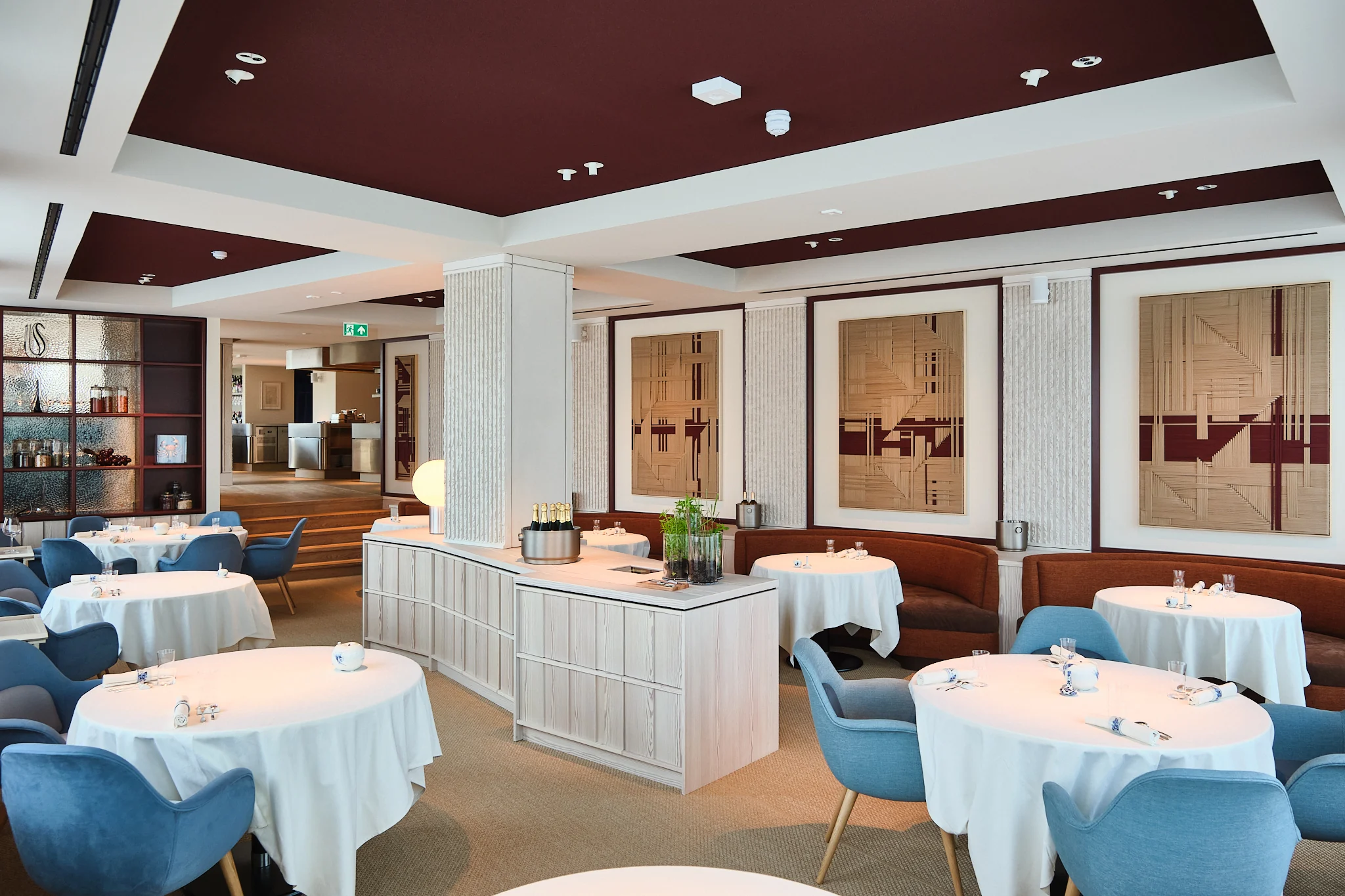
SUIS opened on 28 May 2026 at Strucht 77 in Schin op Geul. Just over four months later, Michelin awarded it two stars. Ralf and Soumia Berendsen built the restaurant around a deliberately personal proposition: its name echoes “je suis”, while the kitchen revisits dishes and techniques that have marked Ralf Berendsen's career. The current address is a complete restaurant in its own right, even as the couple has discussed a broader future project nearby.
The Belgian connection gives this move particular resonance. Berendsen spent years at La Butte aux Bois in Lanaken, where his restaurant held two stars, before leaving the five-star superior hotel to pursue a project with Soumia in his native South Limburg. Michelin's own account emphasises continuity in his technical style—precise cooking, layered flavours and concentrated sauces—but the award applies to SUIS as a restaurant, not to a portable status attached to its chef.
What these two promotions do—and do not—prove
Together, Azurite and SUIS suggest that authorship is becoming a visible asset in Dutch fine dining: not celebrity for its own sake, but a restaurant whose scale, room and culinary language make a chef's choices easy to read. Their locations also pull attention away from the most obvious metropolitan centre. Delft is a historic city with direct rail access; Schin op Geul is a village in the Limburg hills. Neither setting needed an Amsterdam address to enter the guide at a high level.
Still, two awards cannot establish a national trend. Both chefs arrived with long records, experienced teams and recognisable styles, so these are not arguments that a new restaurant can simply accelerate past the difficult work of consistency. The closing of established two-star restaurants elsewhere also shaped the numerical picture. Michelin records a selection; it does not by itself explain the economics, staffing pressures or durability behind each dining room.
The useful question begins after the ceremony
The immediate achievement is clear: two recent restaurants, led by chefs starting highly personal chapters, have entered the Dutch guide with two stars. The longer test is less theatrical. Azurite must turn a dramatic first recognition into continuity after its first full year; SUIS must consolidate a two-star standard after barely a season of service.
That is why the 2026 result is more interesting as a beginning than as a coronation. It rewards accumulated craft while resetting the context in which that craft is judged. For diners and for the industry, the point to watch is whether these compact, author-led restaurants can convert immediate critical recognition into durable institutions without losing the personal clarity that made them legible so quickly.