


On the top floor of Faubourg 21, Chaga shifts fine dining away from ceremony and towards proximity. The kitchen is open, the brigade remains in view and fire is treated less as spectacle than as a tool for shaping flavour. For Kevin Lejeune, the restaurant opens a new chapter after La Canne en Ville: more exposed, more immediate, yet still governed by the precision that defined his earlier work.
According to information supplied to Gastrognito by Chaga, a new Galician octopus is intended to become one of the restaurant’s signature dishes. It points to the same balance found across the current menu: controlled embers, fermentation and Japanese references meeting distinct Belgian markers, from Petits-Gris snails from Namur to Belgian venison and Beersel gueuze.
A new chapter rather than a clean break
Lejeune’s trajectory gives Chaga more substance than a launch narrative. He entered hotel school in Namur at fourteen, worked at houses including Lemonnier and L’Éveil des Sens, then joined David Martin at La Paix. He became sous-chef within four months and remained for a decade: long enough to absorb the demands of a major kitchen without allowing them to become his final vocabulary.
In 2018, he took over La Canne en Ville. The restaurant received a MICHELIN star in the 2020 Belgium and Luxembourg guide, and Gault&Millau named Lejeune its 2021 Young Chef of the Year for Brussels. Chaga is therefore not a first declaration of intent. It shifts the centre of gravity: the discipline remains, while the setting, the visibility of the craft and the relationship with heat change.
According to Horeca Magazine, Chaga opened discreetly on 27 May 2025 and accommodates roughly thirty guests between its counter and a more secluded dining room. The scale matters. It is intimate enough for the kitchen to remain present throughout dinner, but large enough to operate as the gastronomic summit of a hotel rather than a private chef’s table.
Fire as a grammar
Robatayaki provides one of Chaga’s structural threads. The Japanese grill lets the kitchen manage distance from the heat, the intensity of the embers and the influence of smoke. Yet the restaurant is most convincing when fire functions as grammar rather than slogan: supporting a cooking process, bringing tension to a sauce or giving a product a more legible edge.
That distinction keeps Chaga from being reduced to a fashionable device. Fermentation, condiments and carefully built juices remain equally important, and the open kitchen makes the discipline behind them visible. The enamelled lava-stone counter is not merely a design object; it removes part of the distance between dining room and brigade, exposing timing, concentration and the rhythm of service.
The room tempers that exposure. Its dark greens, bronze light and measured spacing create intimacy without turning the meal into theatre. Chaga’s most persuasive luxury is therefore not abundance, but attention: the sense that architecture, service and cooking are calibrated around the same close range.
Galician octopus as a new signature
Chaga has presented its new Galician octopus to Gastrognito as a signature in the making. Its exact composition has not yet been made public. The choice of product nevertheless makes the restaurant’s direction readable: octopus demands exact texture and can meet the embers without allowing smoke to erase its identity.
A signature is useful only when it reveals an intention larger than itself. Here, that intention lies in the meeting of classical control, measured heat and an openness to other culinary cultures. The dish may become an emblem, but Chaga’s identity will depend on whether the same coherence survives across the full menu.
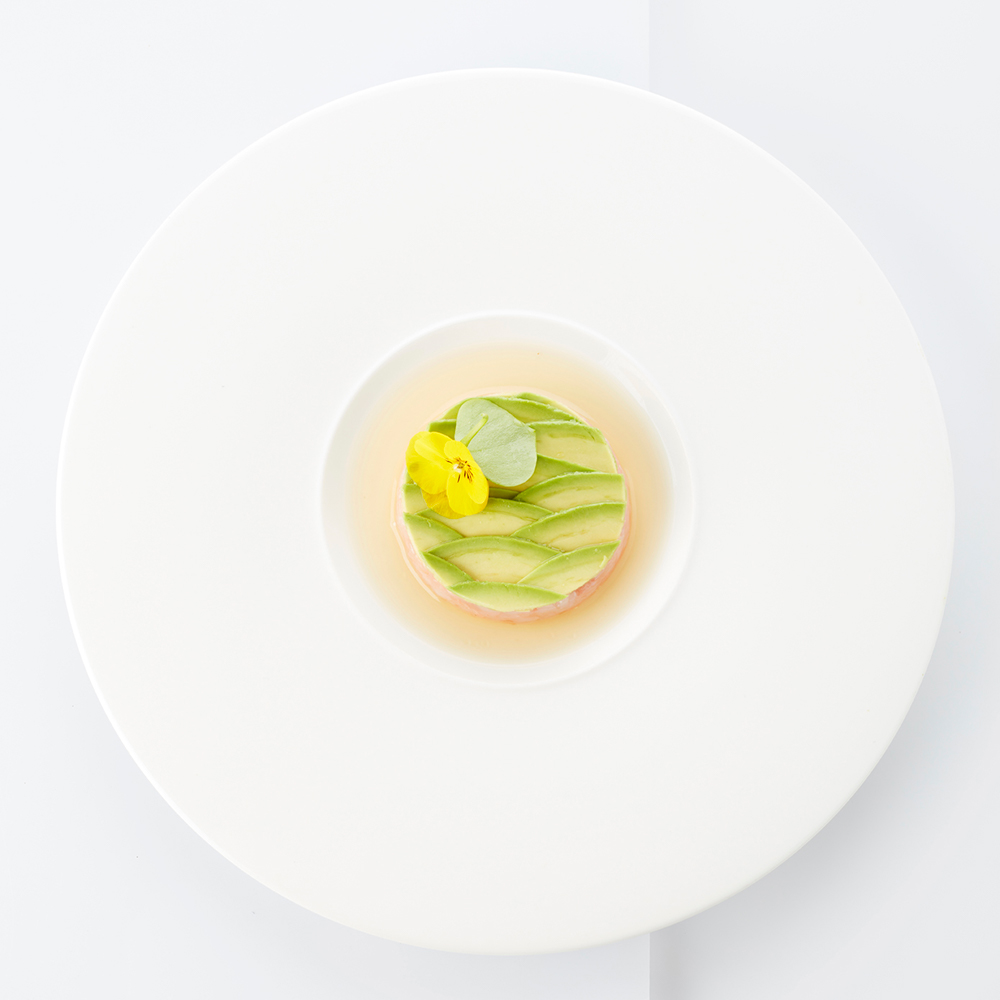
The current autumn sequence suggests that it can. Norwegian scallop is paired with pumpkin, kombu and sake-kasu; Belgian venison with celeriac, quince, juniper and woodland mushrooms. A vegetable mille-feuille brings together sweet-pepper and lemon vinaigrette, savoury granola and shiitake. None of these combinations repeats the octopus. Together, they describe a kitchen seeking continuity through acidity, fermentation, jus and controlled contrast rather than through one recurring ingredient.
Belgium returns through the ingredients
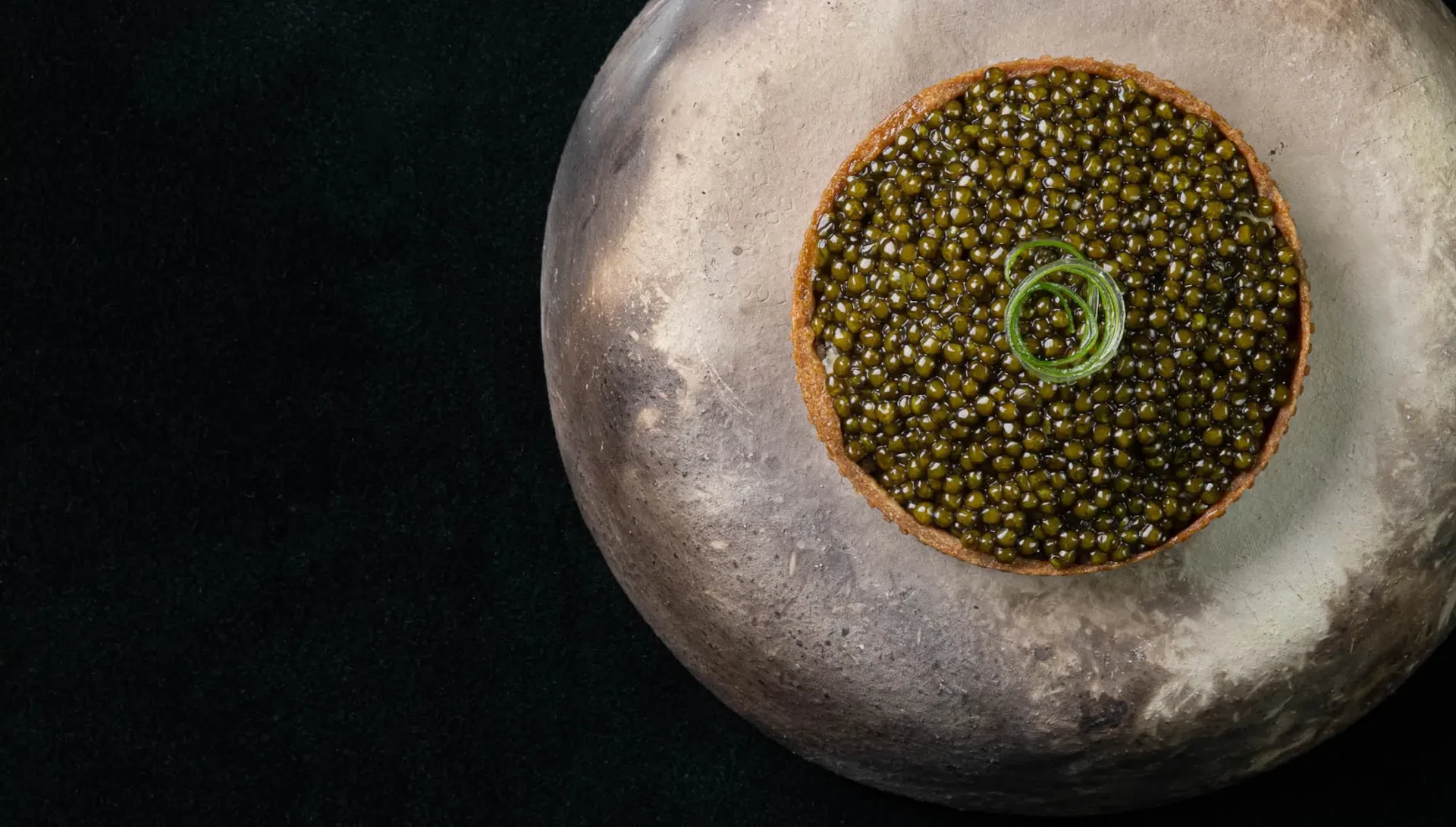
The Belgian references are not presented as a patriotic checklist. They appear through precise inflections. Among the products communicated to Gastrognito, Chaga cites Petits-Gris snails from Namur. The current menu names Belgian venison directly, while Beersel gueuze enters a dessert built around pear, buckwheat, oxalis and koji.
That dessert is particularly revealing. Gueuze anchors the course in the Brussels region, while koji opens another route into fermentation. More than any single technique, the relationship matters: local acidity and Japanese fermentation are treated as common material rather than decorative references.
This is where Chaga begins to escape the category of a merely international luxury restaurant. Its vocabulary travels, but the ingredients give it coordinates. The local markers are not loud; they are sufficiently exact to keep the cuisine from becoming geographically anonymous.
Faubourg 21 changes the scale
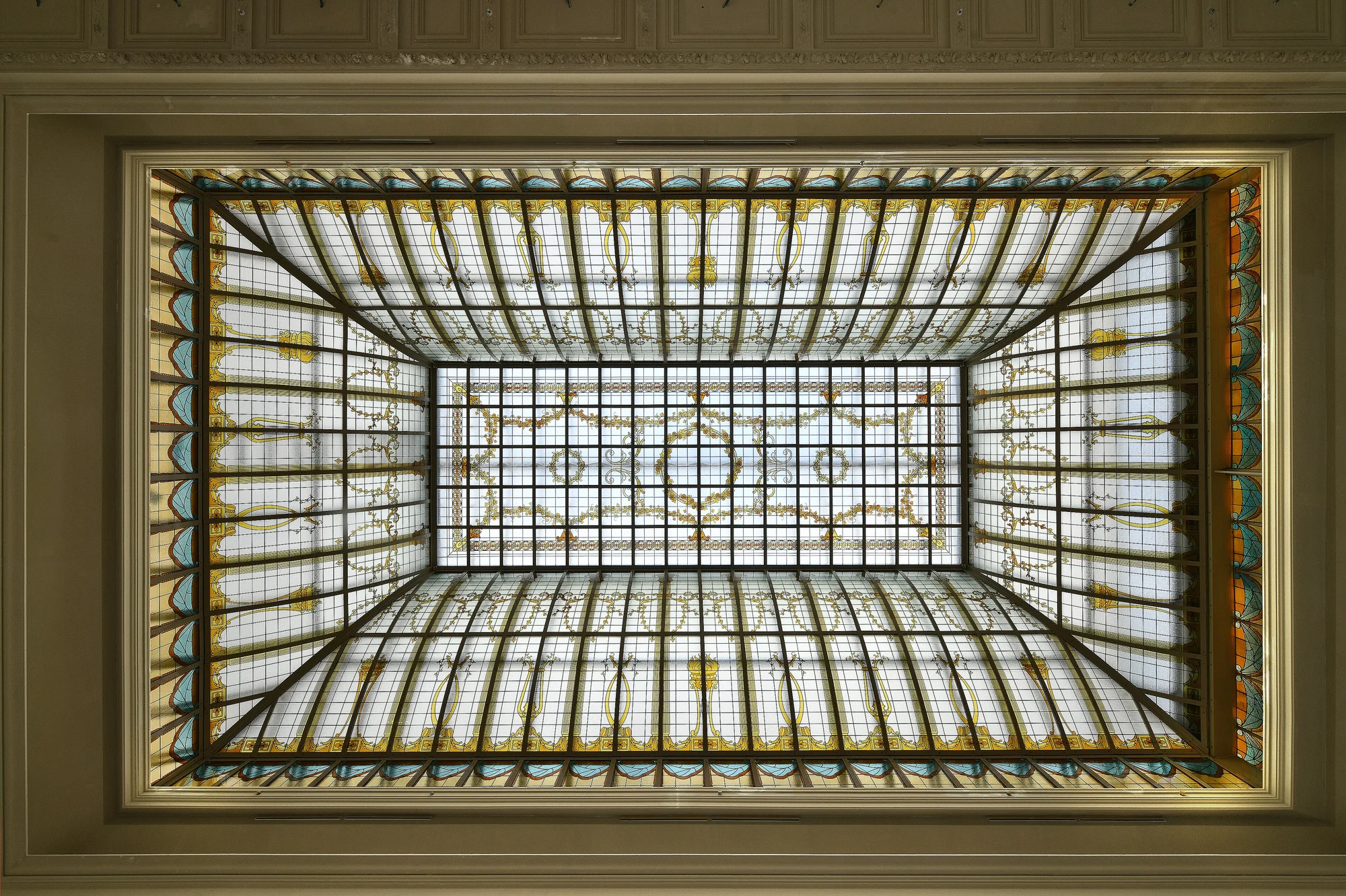
Chaga occupies the top floor of Faubourg 21, a five-star residence hotel housed in a listed nineteenth-century mansion on Avenue Marnix, between the Royal Palace and the Sablon district. The property has twenty rooms and suites, its interiors were designed by Maison Sarah Lavoine and it is a member of The Leading Hotels of the World.
The house also contains Bistra Noisette, Bar 21 and a wellness space. That wider programme gives Chaga a hospitality infrastructure, but the restaurant does not read as an ancillary hotel outlet. Its position at the top of the building, its evening rhythm and the progression towards the dining room make it the culmination of the property.
Faubourg 21 gives Lejeune a setting and an international context that La Canne en Ville did not set out to provide. In return, Chaga gives the hotel a culinary identity with enough autonomy to attract diners in its own right. The relationship works precisely because neither project has to disappear inside the other.
A restaurant defining its own register
Gault&Millau currently rates Chaga 15/20. The MICHELIN Guide lists the restaurant, but its current page displays no star. The distinction is important: Lejeune is a previously starred chef, while Chaga must be judged on what it builds at this address rather than on a distinction earned elsewhere.
The restaurant currently offers five- and seven-course omnivore menus alongside vegetarian alternatives. Beyond the number of courses, the more demanding task is to hold several ideas together: the proximity of an open kitchen, the precision expected of a serious dining room, the warmth of the embers and Belgian references clear enough to give the menu a place.
The Galician octopus may become the emblem of this period. Chaga’s deeper signature, however, lies in Lejeune’s ability to make craft visible without turning it into performance, use fire without surrendering the entire plate to it, and place an independent culinary voice inside a hotel without making it feel like a hotel product.
Chaga × Gastrognito giveaway
The Chaga × Gastrognito Instagram giveaway runs until 28 November 2026. One winner will receive an all-inclusive gastronomic experience for two with an announced value of €550: champagne, two five-course tasting menus, wine pairings, water and coffee. The draw is announced for that day at 12:00 p.m.
Enter through the official Chaga × Gastrognito giveaway ReelEditorial transparency — This article accompanies an editorial collaboration between Gastrognito and Chaga around the giveaway.