


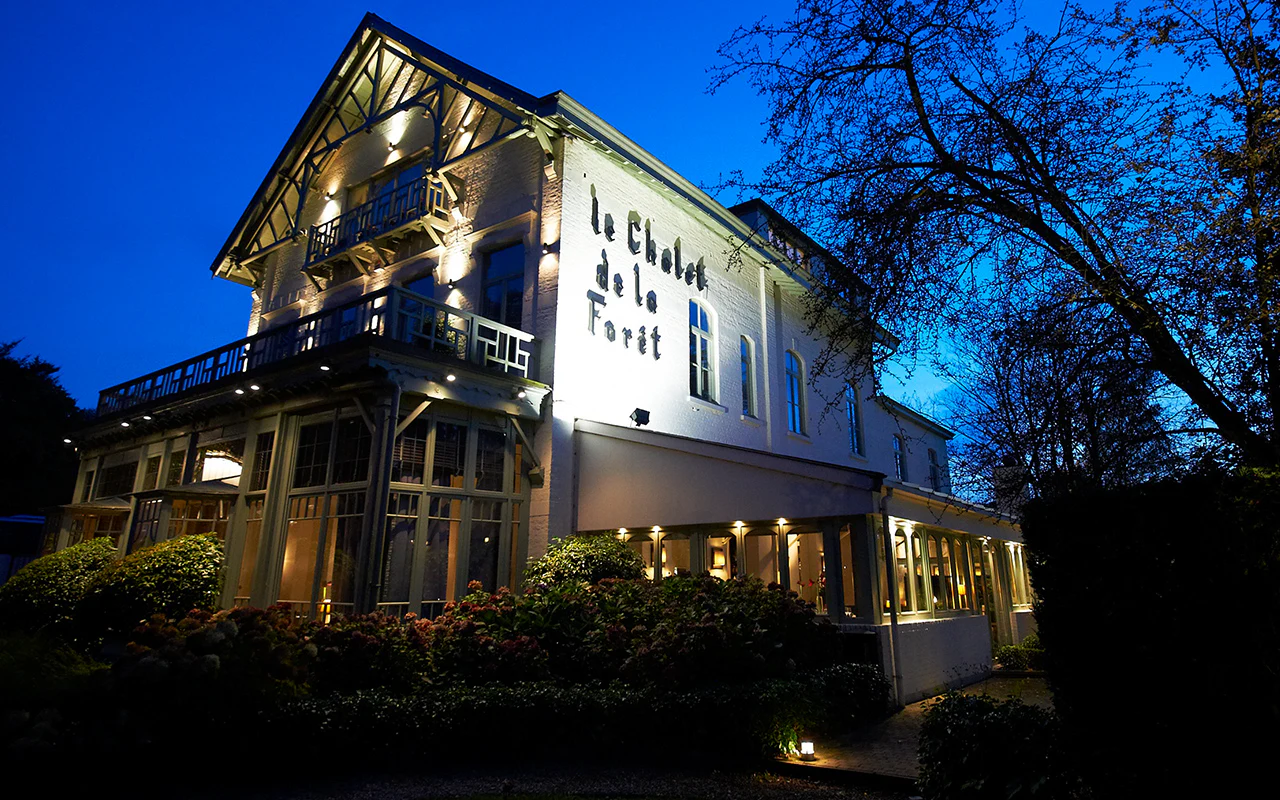
Fine-dining relaunches are often sold as rupture. Le Chalet de la Forêt is taking the more difficult route: keeping the chef, teams, long-standing producers and signature dishes while changing the contract it proposes to guests. On 28 August, Pascal Devalkeneer’s Brussels restaurant announced a redesigned interior, a broader repertoire and a less ceremonial style of hospitality ahead of its official reopening on 15 September 2026.
The proposition is not to make the two-star restaurant less ambitious. It is to make that ambition feel less dependent on a special occasion. That distinction matters, because informality in luxury dining can be cultural without necessarily becoming economic accessibility.
Continuity, not a reset
Le Chalet de la Forêt has been led by Devalkeneer for 27 years. Its launch statement says the restaurant has held two Michelin stars for 14 consecutive years; Michelin’s current online guide continues to list it at that level. Gault&Millau’s current Belgian entry scores it 17.5 out of 20. Those distinctions explain why the relaunch is consequential: an established institution is altering the codes through which it expresses excellence, not trying to manufacture a new identity from scratch.
Several foundations are explicitly being retained. The historic producers remain, the kitchen and dining-room teams stay in place, and Simon Boyer returns alongside Devalkeneer. Signature dishes including oyster tartare with caviar, scallops with salsify and black truffle, and grilled Breton lobster are also due to remain. These are operator-announced elements of the September programme; their execution can only be assessed after reopening.
What changes on 15 September
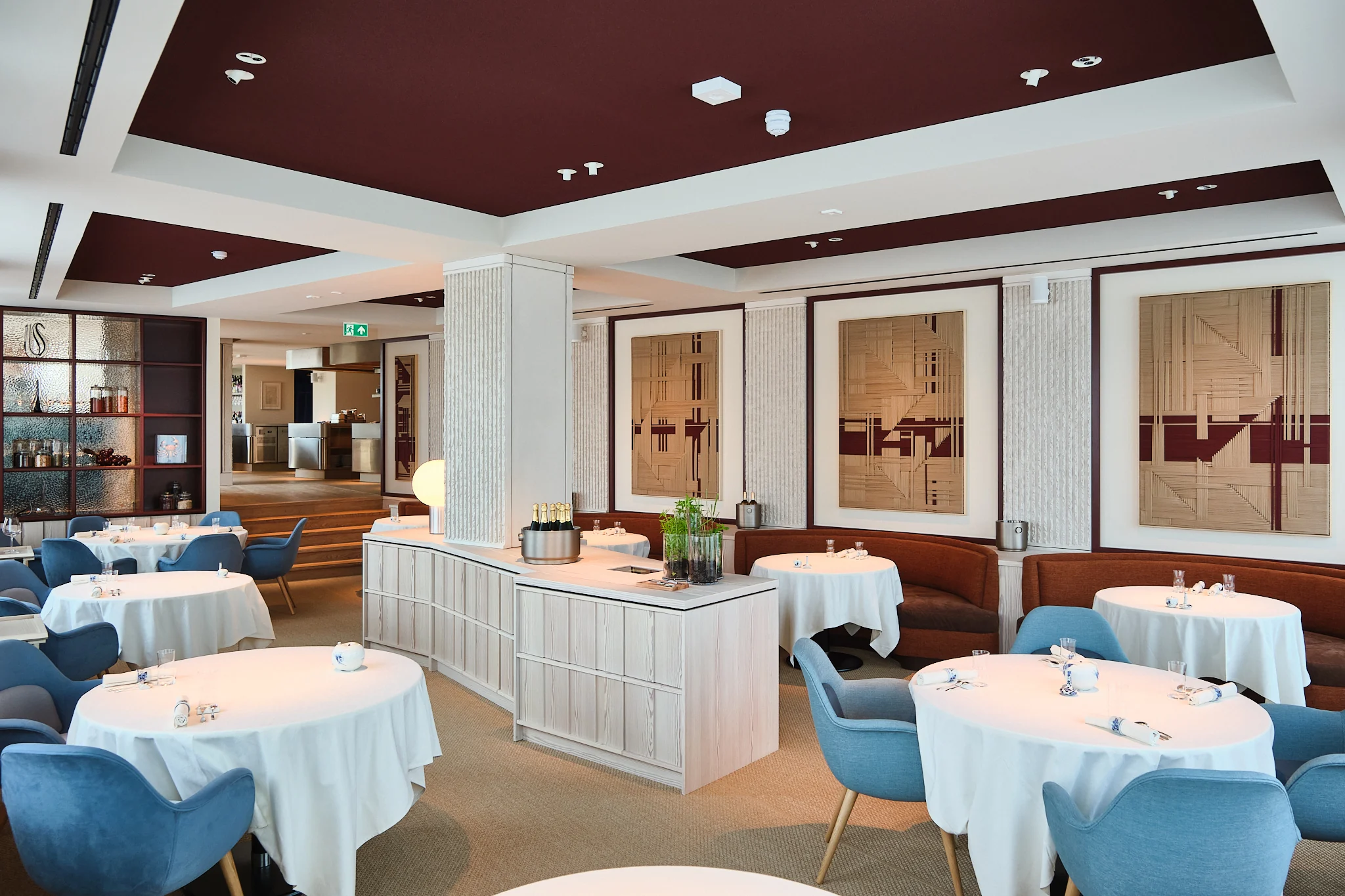
The interior has been fully redesigned by architects François Marcq and Nelly Smets, with art direction by Pili Collado. The announced plan adds an orangery conceived as an indoor terrace, a bar intended to extend the evening beyond the meal and a chef’s table close to the kitchen. A ceramic work by Feipel & Bechameil is to frame the bar’s central fireplace. No project budget or revised seating capacity has been disclosed, so the scale of the investment should not be inferred from the design description.
The material story is unusually local. Bespoke beech joinery was made by Sonian from trees sourced in the neighbouring Sonian Forest, according to the restaurant’s announcement. That detail gives the redesign a connection to place that goes beyond decorative references to woodland. It also creates a useful test for the finished rooms: whether the local craft reads as integral architecture rather than a branding device.
Simplicity becomes visible
The most revealing change may be the coexistence of established luxury products with dishes that look deliberately direct. The announced repertoire pairs the signatures with risotto, lemon linguine and slowly cooked beans. This is not evidence that the cooking has become simple to produce, or that the restaurant is abandoning technique. It is a change in what the kitchen wants complexity to look like on the plate.
That shift follows a wider movement in European fine dining: fewer visible rituals, more recognisable forms and a language of generosity rather than deference. But the launch material remains a statement of intent. Until the new menu is served, it cannot establish whether apparent simplicity produces a more relaxed meal or merely a different style of presentation.
From special occasion to repeat visit
Devalkeneer’s clearest ambition is behavioural. The restaurant wants to be a place guests might choose for an unplanned Tuesday lunch as well as for a milestone dinner. The room, bar, menu and wine list are therefore being asked to reduce the psychological formality surrounding a grand restaurant. Sommelier Jeno Del Turco is also expanding the cellar with selections described as more accessible while preserving its depth.
Accessible needs careful definition here. A warmer welcome, recognisable dishes and a broader range of wines can make a restaurant culturally easier to enter. None of the published material demonstrates a lower overall spend, and the new menu prices had not been made public when this article was prepared. Frequency is the aspiration; economic accessibility is not yet an established fact.
The test begins after the reveal
Independent reports from Eating.be and L’Officiel Belgium confirm the 15 September timetable and the central themes of continuity, freer cooking and a less occasion-bound restaurant. Their accounts remain closely aligned with the launch narrative, however. The meaningful evidence will arrive once the room is operating: how guests use the bar and orangery, how the direct-looking dishes sit beside the signatures, and whether repeat visits become a real pattern.
For now, Le Chalet de la Forêt offers a precise case study in how an acclaimed restaurant can evolve without disowning its past. The relaunch does not promise a revolution. It asks a subtler question: can a two-star institution loosen the ceremony around excellence without blunting the standards that made it an institution? From 15 September, Brussels will be able to judge the answer in practice.