


At Le Millénaire, dinner begins with an unusual decision: not to know everything in advance. In Reims, Benjamin Andreux builds surprise tasting menus around the season. This photographic account of 12 September follows that approach, from the first bottle presented at the table to the work at the pass and the final courses. It considers the restaurant through the things that bring it to life: ingredients, a team and the unfolding of service.
Rue Bertin, a More Intimate Reims
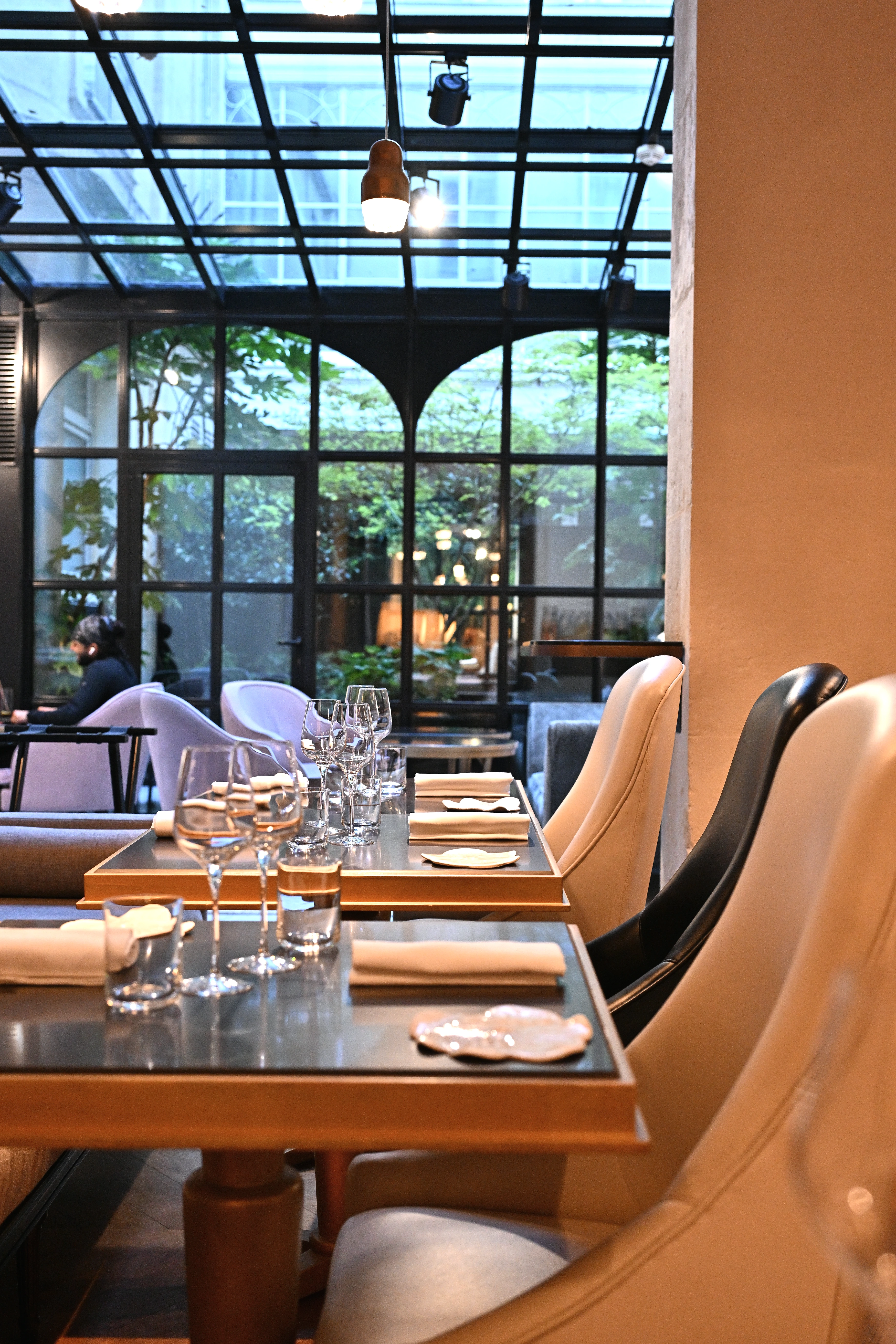
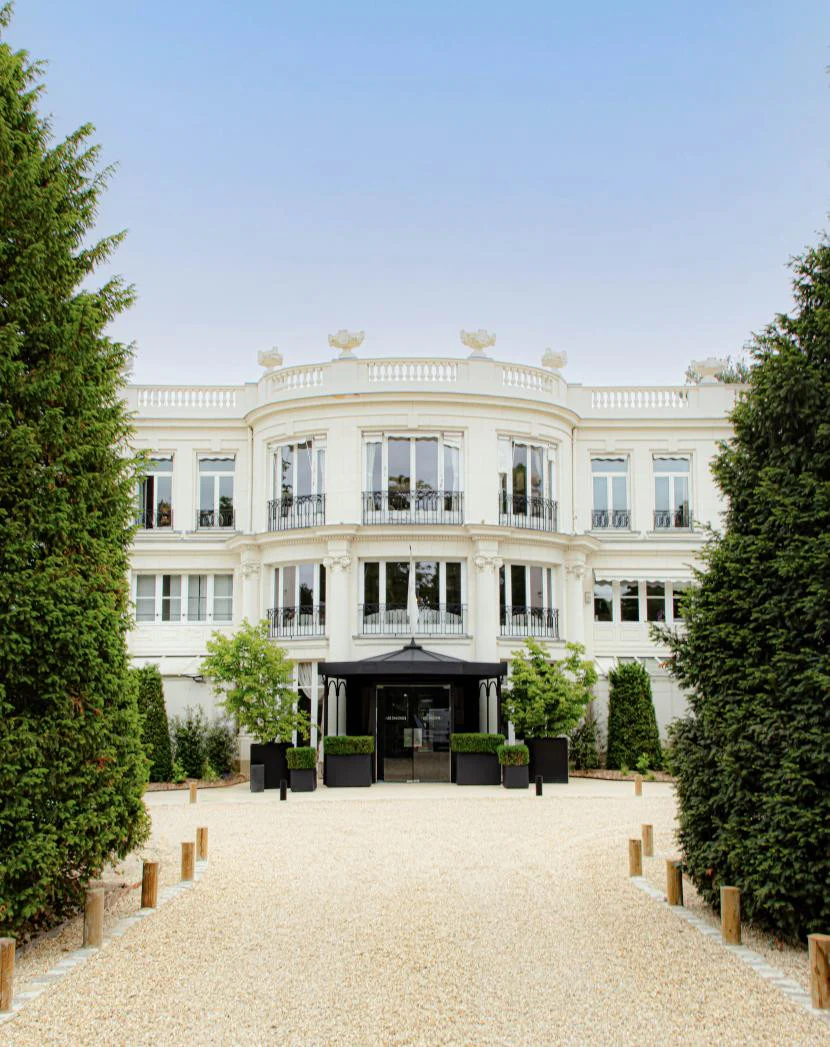
A short walk from Place Royale, Le Millénaire’s entrance introduces a more intimate scale to the city. An illuminated sign sits above a glass door; beyond it are pale surfaces, timber and lighting drawn in clean lines. The setting does not recreate a grand dining room from another era. Its vocabulary belongs to the present.
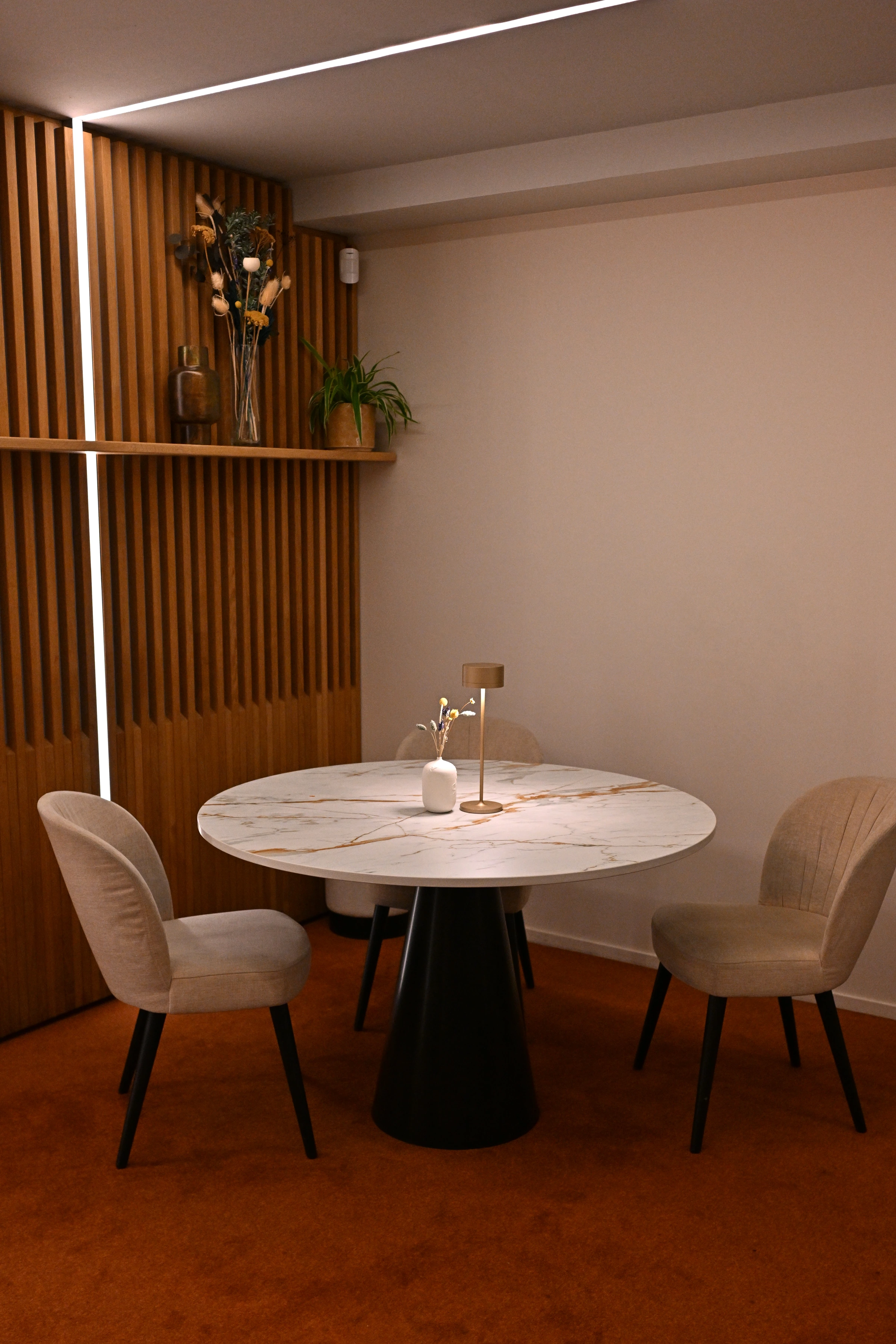
The dining-room photograph brings that vocabulary into focus: a round, gold-veined tabletop, enveloping chairs and vertical timber slats. A few flowers and a small lamp are enough to occupy the table. The setting frames the food without competing with it. White ceramics, reflections in the glassware and the colours of each composition can take their place.
Benjamin Andreux, from Provence to Champagne
Born in Nancy and raised in Les Baux-de-Provence, Benjamin Andreux began his apprenticeship at L’Oustau de Baumanière with Sylvestre Wahid. His career subsequently took him through leading kitchens alongside Yannick Alléno, Stéphanie Le Quellec and Daniel Boulud. Two years heading the kitchen at La Briqueterie preceded his arrival at Le Millénaire in 2023 as head chef and partner.
That background explains the two places the restaurant now places at the heart of its identity: the Provence of his childhood and the Champagne region where he has settled. The connection need not be literal in every dish. It also concerns how ingredients are chosen, how vegetables are considered and how a menu changes as produce reaches its best.
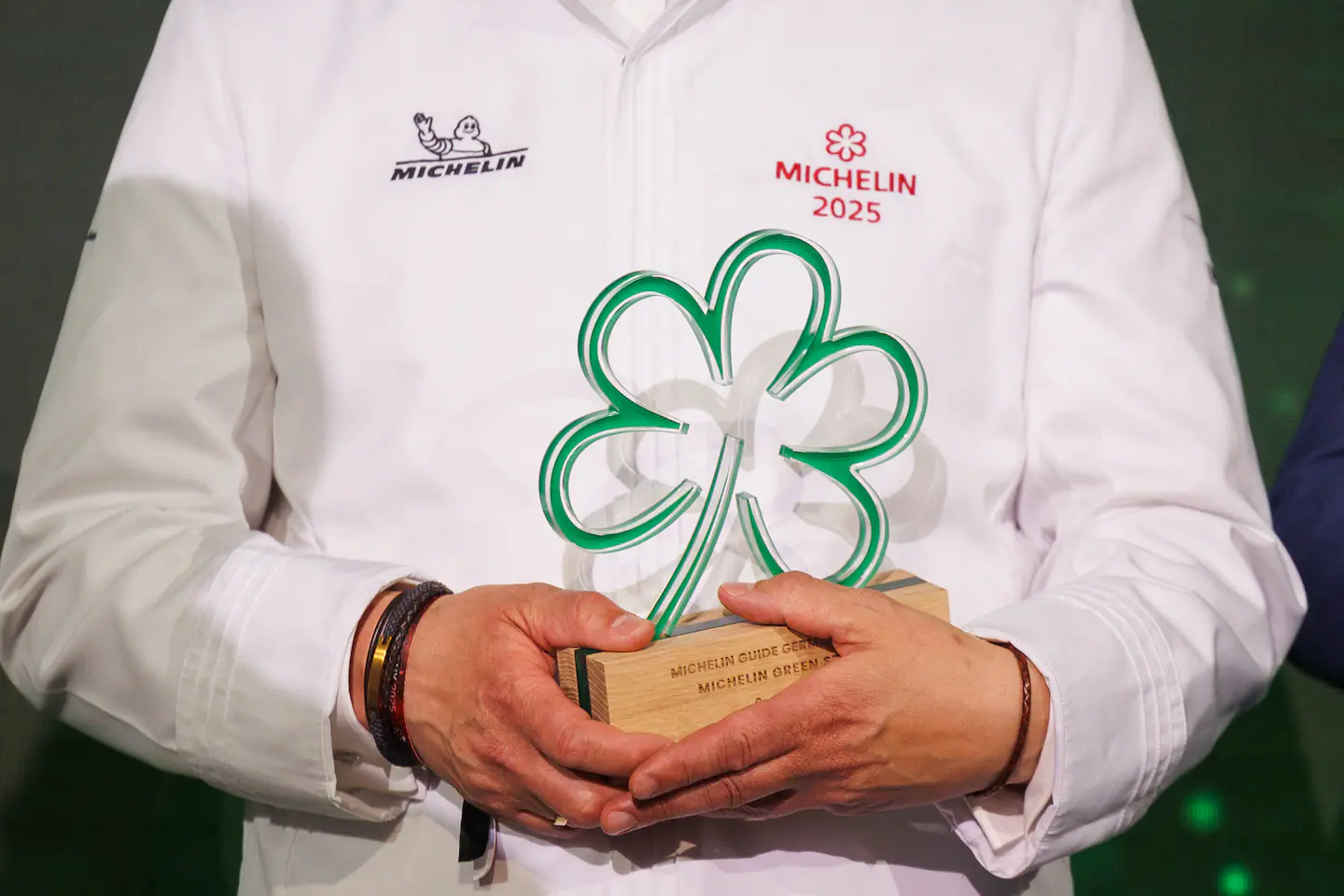
A Michelin star, awarded in 2025 and retained in the 2026 selection, recognises this chapter of Le Millénaire. It is a useful reference for visitors, but it does not fully explain the project. To understand the chef’s approach, one must return to its defining decision: allowing a meal to change with what the season actually provides.
Wine Becomes Part of the Story
Adrien Pilliu now looks after the restaurant’s sommellerie. The first dinner photograph focuses on the presentation of an R. Faivre champagne, Les Reflets du Clocher — Meunier d’Ouverture. Around the bottle, the opening bites already form small landscapes of colour and shape. Wine is introduced at table level, close to the food that is about to be served.
The team’s youth and energy are an integral part of the experience. Their conviviality reaches beyond the brigade and into the dining room, creating a warmth that makes guests feel at ease. This human dimension gives the meal a character that extends beyond the food.
When the sequence of a meal is still unknown, this introduction matters. It provides a first point of reference: a producer, a cuvée and the possibility of a conversation around the glass. The photograph preserves that moment of explanation rather than treating the bottle as a still life.
Letting the Season Shape the Menu
A surprise menu does more than withhold the names of the courses. Benjamin Andreux describes it as a freedom to follow ingredients at their best, without fixing combinations for too long. The approach asks for trust on both sides. Guests agree not to choose every plate; the kitchen takes responsibility for the journey.
In the first composition, a golden lattice opens around a dark centre, punctuated by green accents. The next broadens the arrangement: its elements form an arc across a wide white plate, bringing together red, purple and botanical details. Both images reveal an attention to unoccupied space. The plating does not fill the dish; it directs the eye.
At the Pass, the Work Comes into View
The kitchen photographs introduce another chapter of the meal. Beneath the pass lights, Benjamin Andreux finishes a composition with tweezers in an irregular white ceramic bowl. The sequence connects two aspects of dining that are often kept apart: what reaches the guest and the movements that precede it.
In a 2023 interview with Fine Dining Lovers, Benjamin Andreux discussed the importance of sauces and the influence of his work with Yannick Alléno. That attention to connections, concentration and the construction of flavour offers a way of reading his cooking beyond the appearance of a plate. Technique becomes a compositional tool rather than a subject in its own right.
The ceramic bowl seen at the pass reappears at the table, its red centre now surrounded by a foamy preparation. This link between photographs gives the account a tangible continuity: from a precise movement to the finished composition, then to its position beside the glass.
The Final Touches, Through to Dessert
Service does not always end when a dish is set down. Another photograph catches a thread of oil being poured into the centre of a botanical design. For a moment, the finishing work moves from the pass to the table. Hand, bottle and plate share the frame: the meal remains an action, not simply a succession of photographed objects.
Quentin Weibel, the Sweet Chapter
The restaurant’s pastry kitchen is led by Quentin Weibel. His portrait in the kitchen puts a face to this final chapter of the meal, before the account returns to the plate.
The final photographed dessert takes the shape of a bean, divided by a pale line, with a matching motif set against the white of the plate. After the open arrangements and sauces of the preceding sequence, this compact silhouette brings the visual account to a more graphic close.
Seeing the Restaurant as a Whole
These photographs describe more than a series of dishes: a bottle explained, an exchange at the pass, a finish at the table, a setting that leaves room for the eye. Le Millénaire’s project becomes legible in that continuity between kitchen and dining room. In Reims, Benjamin Andreux pursues a clear direction while allowing the menu to remain in motion. That deliberate freedom is what makes the address worth considering.
The Gastrognito Notebook
Le Millénaire — 4–6 rue Bertin, 51100 Reims, France. Head chef and partner: Benjamin Andreux. Pastry chef: Quentin Weibel. Sommellerie: Adrien Pilliu. One Michelin star in the 2026 selection. Menus evolve; consult the official website for current options and reservations.