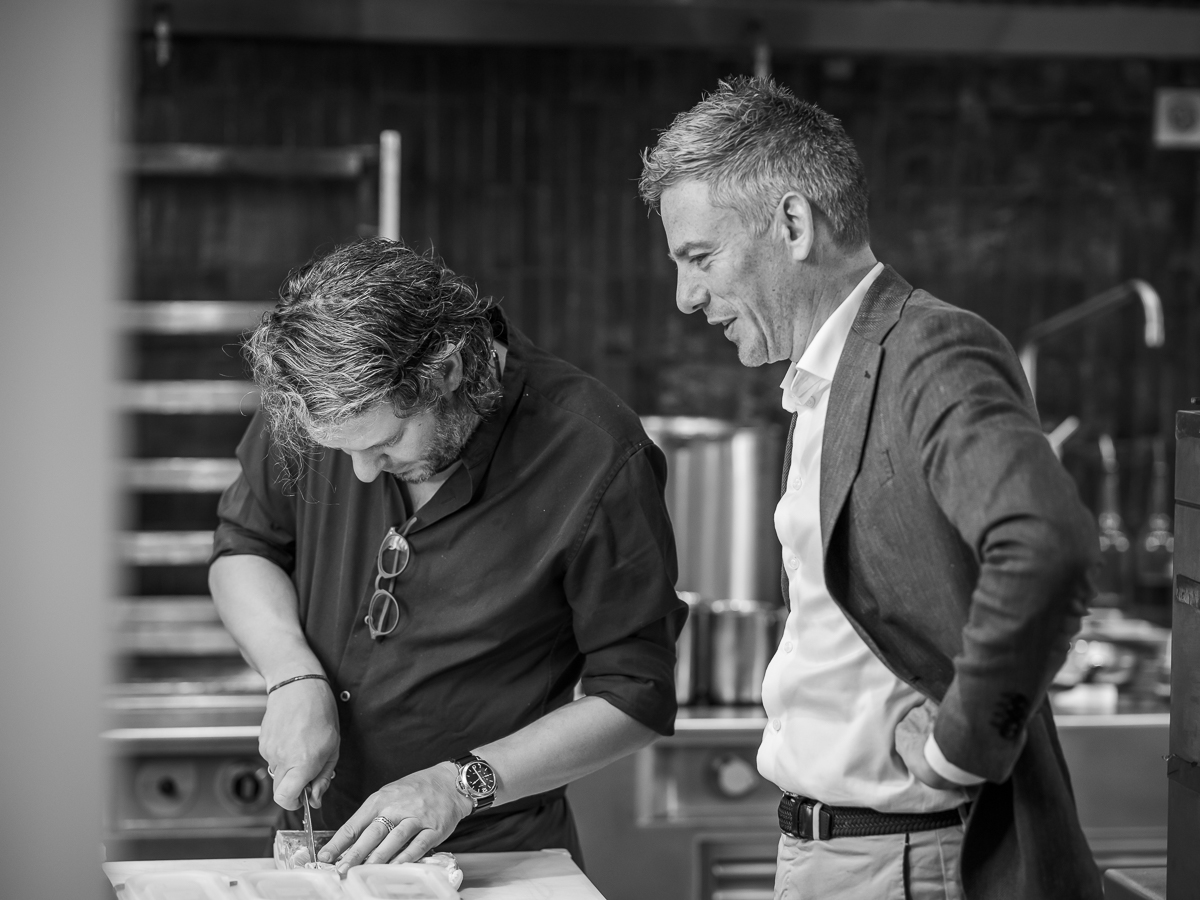



At first glance, closing a Michelin-starred restaurant after roughly three years looks like a retreat. The reality is more nuanced — and more revealing. On 19 October, Christophe Hardiquest announced that his 24-seat counter in Woluwe-Saint-Pierre will serve its final guests on 14 November. The decision has personal and economic dimensions: the chef wants to step back from the daily management of a permanent restaurant, while a subsequent interview with L’Echo documents the pressure on the business. He is not leaving cooking; he is redistributing where and how he practises it.
Menssa, opened in 2023 and awarded a Michelin star in 2024, will close under its own name. Hardiquest plans to divide his time among private dinners, hands-on classes and advisory work, alongside a larger role at Le Petit bon bon inside Corinthia Brussels. The end of one highly visible dining room therefore raises a practical question: can a chef’s prestige, craft and capacity to transmit retain their force without being concentrated at a single address?
A short chapter built around proximity
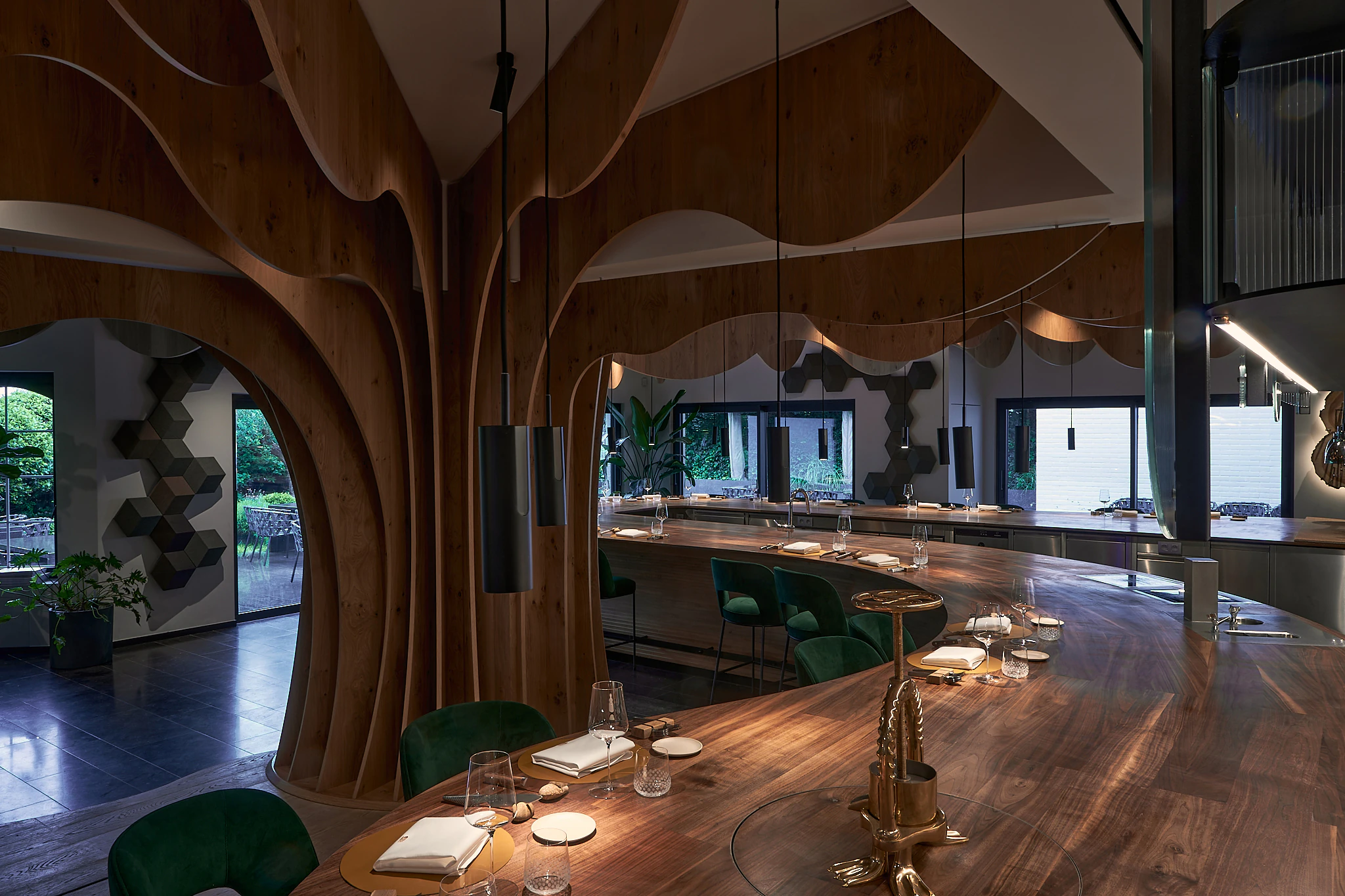
Menssa followed more than two decades of Bon Bon, the restaurant through which Hardiquest built his standing in Belgian gastronomy. Its format was already a deliberate reset: 24 places gathered around an open counter, with the kitchen’s gestures and timing visible to the room. The official site describes that face-to-face arrangement as central to the project rather than a decorative feature.
The chronology is precisely bounded. Menssa opened in 2023, received its Michelin star the following year and will complete its final service on 14 November 2026. That is a brief life for an address carrying such a recognised name. Hardiquest’s first announcement emphasised a personal wish to reduce administration and operational constraints. A subsequent interview with L’Echo added the economic context: he reported an attendance decline of about 10%, said a judicial reorganisation had allowed the company to repay its debts, and confirmed the transfer of the business to the Gillet family.
Four activities after 14 November
The new programme is concrete enough to show direction, but not yet complete enough to function as a launch calendar. Hardiquest plans private dinners in homes or hired venues, with menus adapted to the hosts, guests and wines. He will also continue cooking classes, including a four-hands format in which a client prepares the meal beside him. Prices, frequency and booking details have not been announced.
A second strand combines advisory work with a change of ownership. Hardiquest is due to work with the Gillet family’s teams at Sanzaru, Mizaru and the establishment that will follow Menssa, contributing to sauces, cooking, menu construction, value and staff training. L’Echo identifies the successor as an Italian restaurant intended to be straightforward and accessible; its name and opening timetable have not been made public. BRUZZ separately confirms that a new restaurant will occupy the Menssa premises.
The most public continuity will be Le Petit bon bon, the Belgian brasserie at Corinthia Brussels whose menu bears Hardiquest’s name. He says he will be more present there, working on dishes, team development and the dining-room experience. Occasional projects abroad are also envisaged, although no destination or date has been confirmed. This is not a single replacement for Menssa; it is a portfolio of different settings.
Prestige without one flagship
Seen together, these choices redistribute the same culinary capital. A permanent starred counter offered public visibility, a clear address and a tightly controlled experience. Private dining promises rarity and personalisation; teaching turns technique into direct transmission; advisory work extends influence through other teams; a luxury-hotel brasserie supplies an established platform and a broader service rhythm. Each format asks something different of a chef and reaches a different audience.
It is tempting to describe that redistribution as a new economic formula for fine dining. The evidence supports a more measured conclusion. L’Echo provides one operating indicator — attendance down by about 10% — and the disclosure of a judicial reorganisation and repaid debts, not a complete set of accounts. Nor does a lower fixed burden automatically create a more profitable or resilient business. Hardiquest is choosing flexibility over daily control under his sole banner, but that freedom also comes with a transfer of ownership and operating responsibility.
Documented pressure, not a verdict on the sector
The closure deserves more than celebrity treatment. The pressures are no longer merely inferred: in L’Echo, Hardiquest pointed to rising costs, constrained purchasing power and more volatile customers alongside the personal cost of restaurant ownership. These details give the decision economic substance. They do not turn one operator’s experience into a statistical diagnosis of Brussels fine dining, nor do they establish a single cause for the closure.
There is also continuity at the address. BRUZZ reports that another restaurant will take Menssa’s place with Hardiquest advising the team, while L’Echo specifies an Italian direction. The useful distinction is therefore between the end of Menssa as a restaurant and the disappearance of hospitality from its premises. The first is confirmed; the second is not what the announced transfer describes, although the successor’s name and calendar remain unknown.
What remains to be tested
The date of 14 November fixes the end of Menssa, not yet the balance of what follows. Hardiquest’s work will be spread across public, private and advisory settings, while the Gillet family takes over the business. The shift will be judged not by the number of announcements it produces, but by whether the promised dinners, teaching and consulting form a coherent and durable practice.
Menssa was designed to reduce the distance between chef and guest by bringing both sides to one counter. The model that follows keeps proximity as a promise but changes where, and under whose roof, it is delivered. This is neither retirement nor a simple change of scene: it is a change of ownership and working structure whose success can only be judged once the announced formats and successor restaurant actually exist.