


Ma Langue Sourit sounds less like the name of a two-Michelin-starred restaurant than a spontaneous reaction at the table. That is precisely its strength. Cyril Molard discovered the phrase in an anecdote about a four-year-old describing the happiness of eating chocolate ice cream and kept it in mind long before he had a restaurant of his own.
Nearly two decades after the house opened, the name still reads as a manifesto. However elaborate the preparation, Molard’s cooking is meant to give pleasure before it invites analysis. Our dinner on 14 November 2026 was shaped by that absence of stiffness: an exacting experience whose refinement never became an obstacle between the diner and the food.
From the Vosges to Moutfort, an artisan’s journey
To understand this cuisine, it helps to begin in the Vosges and a family of butchers and charcutiers. Molard first trained as a charcutier-traiteur. The craft gave him an intimate command of seasoning, forcemeats, pâtés, slow cooking and the concentration of meat juices—knowledge that still gives his food much of its authority.
His path into restaurant cooking was built through encounters. Guy Krenzer brought him to Lapérouse in Paris. Molard then worked with Emmanuel Renaut in London and the Haute-Savoie, and with Édouard Loubet, before family circumstances briefly returned him to the family business. Luxembourg followed: first La Lorraine, then eight years at Hôtel Le Royal, where he rose to executive chef.
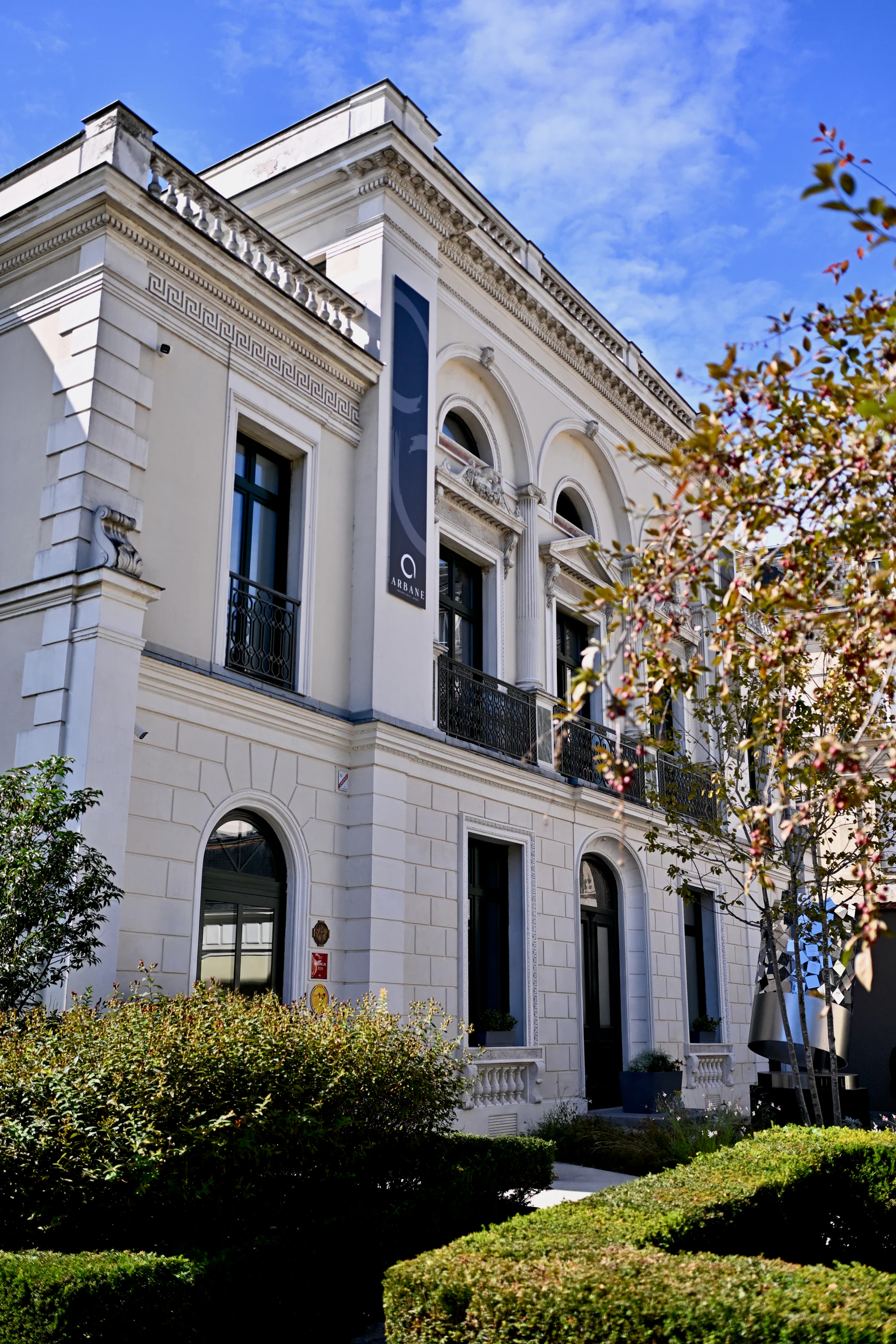
A prestigious hotel kitchen offered security, but it was still someone else’s house. Cyril and Anne-Sophie Molard opened Ma Langue Sourit on 2 April 2008. A first Michelin star came soon afterwards; the second followed in the 2018 guide, after the couple had bought and transformed the building. What now looks like a Luxembourg institution was built through craft, personal risk and the daily discipline of repetition.
A technique that chooses to disappear
Molard’s cooking rests on a productive paradox. It is technically dense but refuses to turn technique into theatre. Stocks, smoking, precise cooking and the control of textures serve a more direct expression of the product. The work is substantial; the result is not supposed to feel laborious.
Over time, the chef has sought to place fewer competing flavours in each dish and make those that remain more distinct and deeper. This editing does not produce austerity. It releases appetite: measured acidity gives movement, a sauce broadens the flavour, and vegetables bring the rhythm required to keep richness alive.
Sauces are the most constant syntax of this language. They are neither ornament nor a nostalgic salute to French classicism. They carry the argument of the dish. Jus made from shellfish or meat, a beurre-noisette sabayon or the depth of poultry are treated as foundations—work that begins long before service and is felt without needing to be explained.
The scallop, or depth without heaviness
The scallop served during our dinner condensed that approach. It came with a farmhouse-style sauce built on a poultry base. The pairing brought a delicate marine product into the deeper register of a meat-derived sauce, connecting seafood cookery with the charcutier’s understanding of extraction, concentration and jus.
Its interest was not novelty for its own sake. The dish showed how Molard uses classical foundations without allowing them to weigh down the present. Sauce is essential, yet more precise and mobile than emphatic. It gives the product a lineage while keeping the meal firmly contemporary.
Scallop has returned in different forms across the restaurant’s repertoire. Garnishes and sauces evolve, but the principle remains: the product is never isolated, and its accompaniment must contribute more than decoration. Michelin and Gault&Millau have both singled out this ability to find depth through sauce while preserving clarity.
The garden beside the charcuterie
Reducing Molard’s cooking to its carnivorous foundations would miss half the picture. The restaurant says that around 90% of its ingredients come from Luxembourg or the Greater Region, within the natural limits imposed by seafood and certain products. A particularly close relationship links the kitchen to local grower Sandrine Pingeon at Les Paniers de Sandrine in nearby Munsbach.
Vegetables are not polite relief between richer courses. They can determine a dish, enter desserts or form a complete meat-free sequence. This increasingly vegetal vocabulary coexists with pâté en croûte and pithiviers rather than replacing them. The conversation between garden and charcutier is precisely what gives the cooking its range.
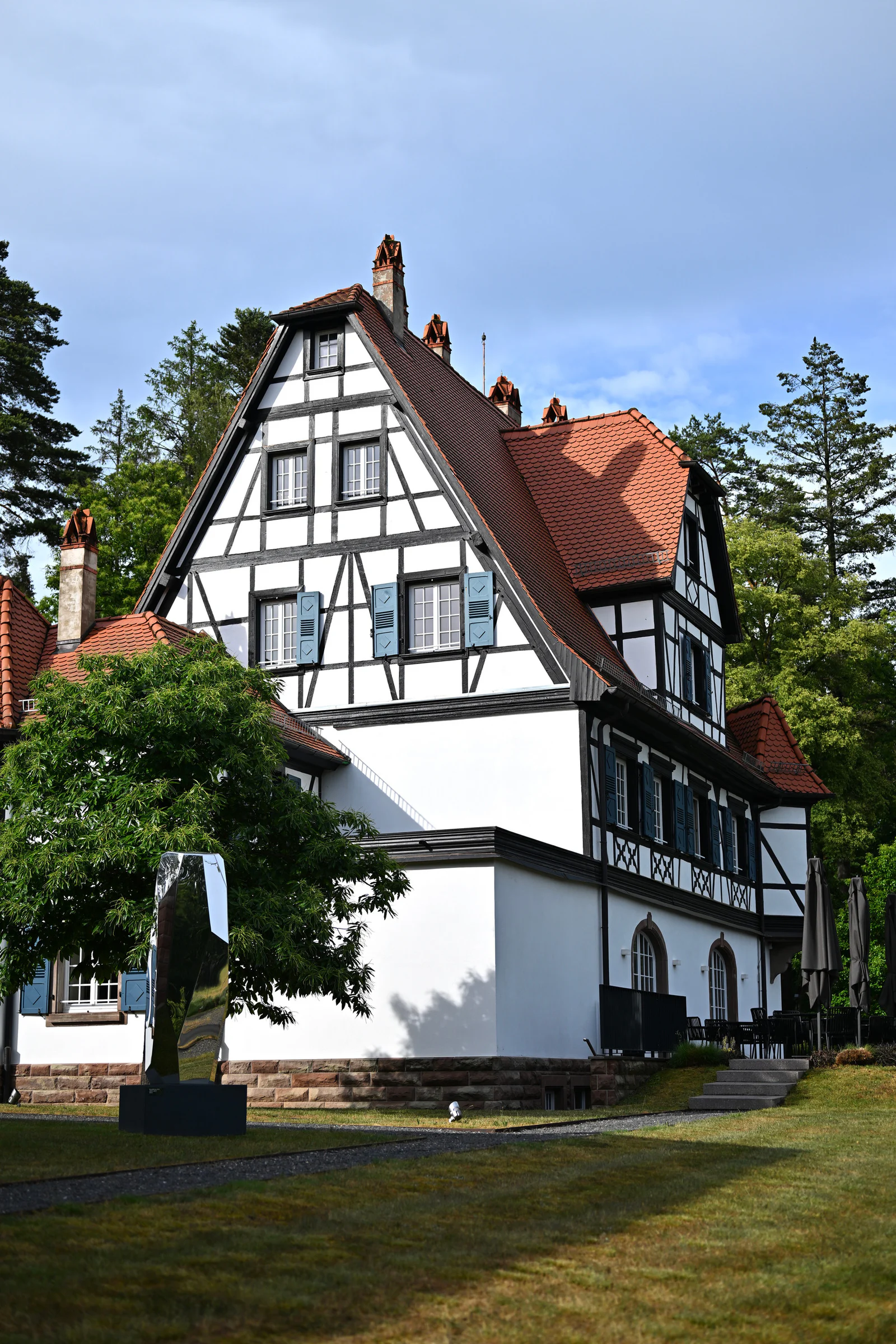
Even the forest has entered Molard’s repertoire. A house signature combines Douglas fir, apple and sorrel in a spruce sorbet, joining a memory of the Vosges to the wooded landscape around Moutfort. It is a more personal expression of locality than a list of producers: territory translated into memory.
The maturity of a house that still questions itself
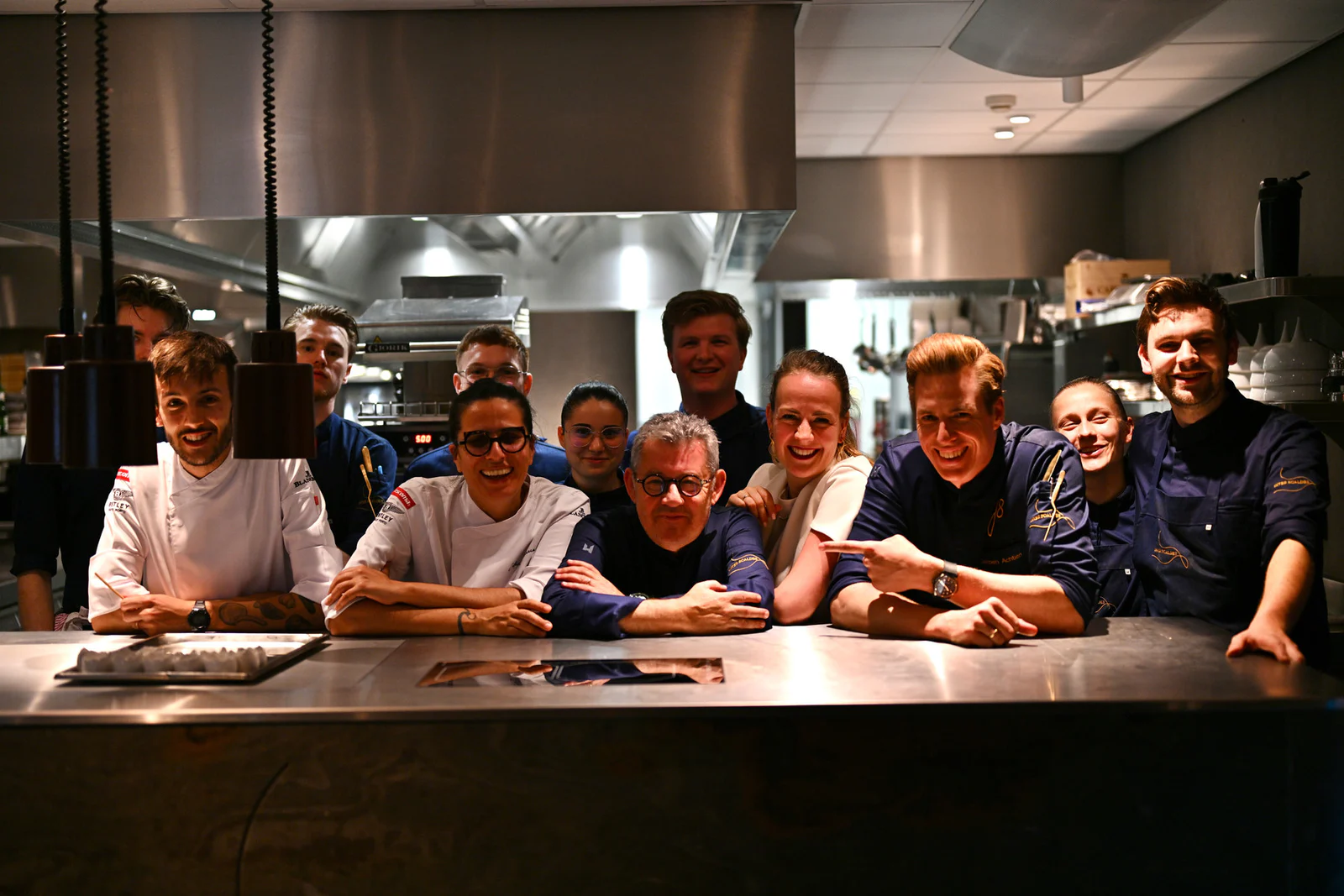
Ma Langue Sourit is also the work of a couple and a team. Anne-Sophie Molard has helped shape the house from the beginning, while the kitchen develops ideas collectively rather than treating creation as a solitary decree. The restaurant’s hospitality follows the same principle of proximity: the distance traditionally associated with grand dining is deliberately shortened.
The distinctions measure the road travelled without fully explaining it. Ma Langue Sourit holds two Michelin stars in 2026 and a score of 18.5 out of 20 from Gault&Millau. Molard was named Chef of the Year in 2014 and 2020; Gault&Millau also lists Host of the Year 2023 and Pastry Chef of the Year 2024 distinctions for Ma Langue Sourit. It is also a member of Les Grandes Tables du Monde.
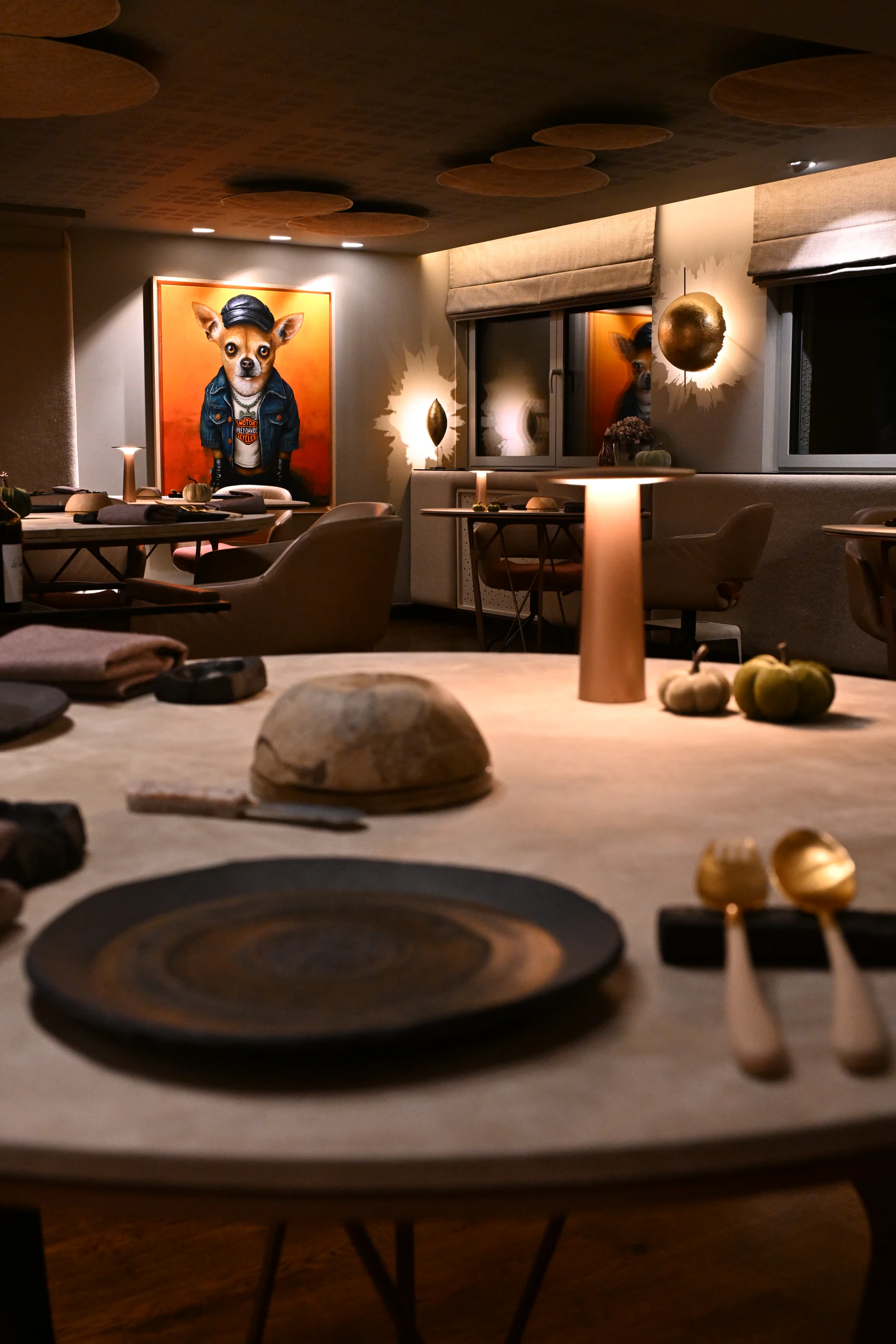
The more revealing achievement is duration without immobility. The dining room has changed, the relationship between kitchen and guests has opened up, and the plates have become more concise. Molard continues to treat doubt as a working method. Creation attracts attention; consistency, service after service, is the harder form of mastery.
The tasting menu is called Meraki, a Greek word associated with putting care, energy and something of oneself into the work. Here it feels less like branding than a description of how the restaurant has been built: through persistence, collective effort and the refusal to confuse complexity with depth.
Ma Langue Sourit occupies a singular place in Luxembourg gastronomy because its vocabulary belongs both to its chef and to its adopted territory. The Vosges, the charcuterie apprenticeship, the great French kitchens, the Luxembourg garden and the forest around Moutfort meet without being forced into a manifesto.
Its most convincing luxury is not spectacle. It is the confidence to place deep classical knowledge at the service of something apparently simple: a product understood, a sauce with purpose and a meal that can be enjoyed without instructions. The child’s phrase that gave the restaurant its name remains its most demanding standard.